Maybe you came back to a parking lot to find your car gone, or you’re staring at a mountain pass wondering if your all-seasons are actually legal there. British Columbia’s towing rules split into a few different pieces - commercial oversight, private-lot rules, and winter tire law - and it helps to know which one applies to your situation.
Commercial Towing Oversight: CVSE
Commercial towing operations in BC fall under the Commercial Vehicle Safety and Enforcement (CVSE) branch, which governs the safety and compliance side of commercial tow trucks operating in the province - vehicle standards, operator compliance, that kind of oversight. CVSE’s framework is about the commercial vehicle side of towing rather than a consumer bill of rights the way Ontario’s TSSEA is, so if you’re looking for a specific line in BC law guaranteeing an itemized invoice or pre-tow rate disclosure the way Ontario now has, that level of detail isn’t spelled out the same way. Treat CVSE as the backstop for making sure the trucks and operators on the road are legitimate commercial operations, and treat your own vigilance - documented pricing, photos, asking questions before you agree to anything - as your day-to-day protection.
Private-Property Towing: Signage Is the Key Rule
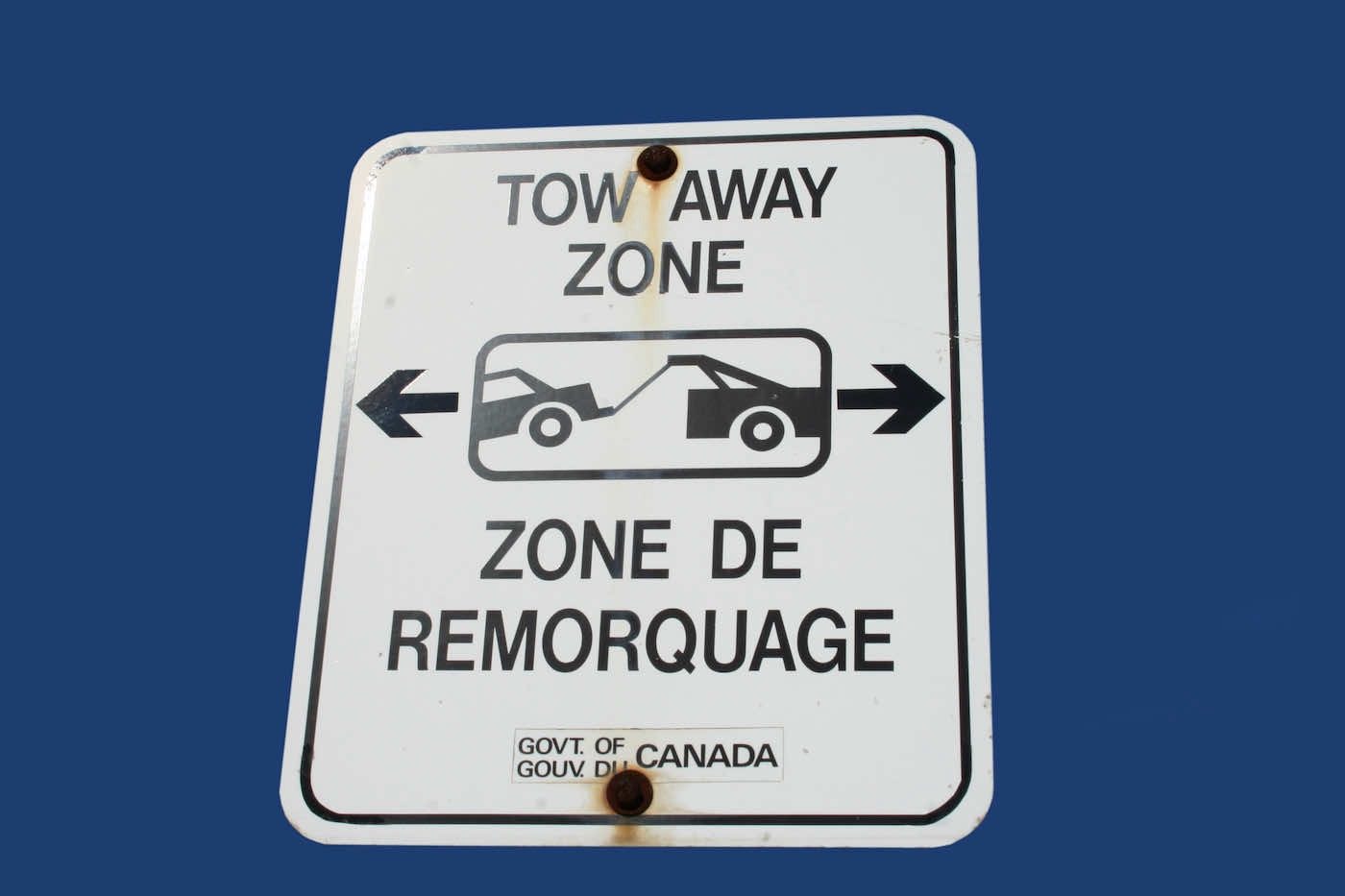
This is the one that catches people off guard most often - parking somewhere that looks fine and coming back to an empty spot. In BC, private-property towing (mall lots, apartment complexes, private lots enforcing “customers only” or similar restrictions) requires clear signage. If a property wants to enforce towing for unauthorized parking, they need to post visible signs saying so - the rules, the conditions, and typically who to contact.
What this means for you as a driver: before you assume a tow was legitimate, check whether the lot actually had clear, visible signage warning that unauthorized vehicles would be towed. No sign, or a sign that’s hidden, faded, or ambiguous, is worth raising directly with the property owner or the towing company - and worth documenting with a photo if you can get back to the lot.
Practically, protect yourself by:
- Reading posted signs at any lot before you park, especially at malls, condos, and private lots near busy areas
- Photographing the signage (or lack of it) if your car does get towed, since that’s your evidence for a dispute
- Asking the towing company which property owner authorized the tow, and getting an itemized invoice regardless of whether it’s strictly mandated
Winter Tire Requirements: October 1 to April 30
BC has among the most concrete winter driving rules in the country. On designated highways - mainly mountain passes and specific routes across the province, which are signed - winter tires (or chains, in some cases) are required from October 1 through April 30. These aren’t a general suggestion; they’re enforced on the routes where they apply, and getting caught without proper tires on a signed route during that window can mean being turned back or fined.
Signage on the highway itself will tell you when you’re entering a zone where the requirement is in effect, so pay attention to those signs on any mountain or interior route during the fall-to-spring window, not just when it’s actively snowing.
This matters for towing too: if you’re on all-seasons in a signed zone during winter and get stuck or slide off, you’re not just dealing with the immediate problem - you may also be dealing with the fact that you weren’t following a posted requirement, which is worth knowing before you set out rather than after you’re already waiting on the shoulder.
Checking Conditions: DriveBC
BC doesn’t participate in the 511 road conditions system that most other provinces use - instead, DriveBC is the province’s own resource for road conditions, closures, and highway cameras. If you’re heading into the interior or over a pass during winter tire season, checking DriveBC before you leave is a genuinely useful habit, not just a formality.
Getting Unstuck Safely in Winter Conditions
Even with proper winter tires, mountain passes and interior highways can still leave you stuck in a ditch or waiting for a boost in genuinely cold conditions. A ditch pull is a winching job, typically billed separately from a standard tow, and it’s worth asking upfront what that extra charge looks like before the truck starts pulling. If it’s your battery rather than your traction giving out in the cold, a battery boost is a much smaller bill than a full tow - but either way, get the price confirmed before work starts, the same practical habit that matters everywhere in Canada regardless of exactly what the local law requires in writing.
Quick Reference
| Situation | What applies in BC |
|---|---|
| Commercial tow truck oversight | CVSE governs commercial vehicle/operator compliance |
| Towed from a private lot | Requires clear posted signage to be enforceable |
| Winter tires on designated highways | Required Oct 1–Apr 30, signed routes |
| Checking road conditions | DriveBC (BC doesn’t use 511) |
| Getting your vehicle back | Ask which property/operator authorized it, get an itemized invoice |
What To Do If You Think a Tow Was Unfair
If you’re towed from a private lot with no visible signage, or a commercial operator won’t give you a clear, itemized breakdown of charges, don’t try to resolve it in the parking lot. Photograph what signage does or doesn’t exist, get the towing company’s name and the storage yard address, and keep every document from the transaction. From there, raising the issue with the property owner (for private-lot tows) or through general consumer channels is your path - BC doesn’t have an Ontario-style dedicated towing act with its own complaint process, so documentation is what makes your case.
If you’re stuck on a highway rather than dealing with a private-lot dispute, check DriveBC before you set out, and know how to find a tow truck near you if the worst happens on a mountain pass. A rough price check with the towing cost calculator helps you spot an inflated quote before you agree to it. If your vehicle needs a full deck rather than a wheel-lift - common for AWD vehicles heading into the interior - see flatbed towing for what that involves.
FAQ
Do I need winter tires everywhere in BC? No - winter tire requirements apply to designated highways, mainly mountain passes and specific signed routes, from October 1 to April 30. Check signage on your specific route, especially in the interior and on mountain highways.
Can a private lot tow my car without warning? Not legitimately - BC requires clear signage for private-property towing to be enforceable. If there’s no visible sign warning of towing, that’s worth disputing directly with the property owner or towing company.
What is CVSE and does it protect consumers? CVSE (Commercial Vehicle Safety and Enforcement) oversees commercial towing operations in BC from a vehicle and operator compliance standpoint. It isn’t a consumer rights framework the way Ontario’s TSSEA is, so day-to-day protection still comes down to your own documentation and questions.
Does BC use 511 for road conditions? No. BC uses its own system, DriveBC, for road conditions, closures, and highway cameras rather than participating in the 511 network other provinces use.
What should I do if I think I was towed unfairly from a private lot? Photograph the signage situation, get the towing company and storage yard details, request an itemized invoice, and raise the dispute with the property owner or through general consumer protection channels.