
Your phone shows one bar, then none. The last town was forty minutes back, the next one’s unknown, and the engine just made a noise you didn’t like. Rural Canada has enormous stretches where cell coverage simply doesn’t reach - and a breakdown there plays out very differently than one on a city street. The good news is that most of what keeps you safe here happens before you ever leave the driveway.
Prepare Before the Trip, Not During It
The single most effective thing you can do about a rural, no-signal breakdown is treat it as a planning problem, not a roadside problem. If you regularly drive highways between towns - northern Ontario, the Prairies, BC’s interior, Quebec’s regions, or Atlantic Canada’s coastal routes - build a habit around a few things every time:
- Fill the tank before long rural stretches. A near-empty tank turns a manageable wait into a fuel emergency, especially in winter when you may need the engine for heat.
- Carry a physical, printed map or an offline map downloaded to your phone. GPS apps that rely on live data can fail exactly where you need them most.
- Pack a basic kit: water, snacks, a blanket, a flashlight, a portable phone charger or power bank, and jumper cables. None of this depends on cell service to work.
- Check your spare tire and basic tools before you go, not after you’re stuck. A rural breakdown from a flat is often self-fixable if you’re equipped; without a spare, it isn’t.
Tell Someone Your Route
This is the step most drivers skip, and it costs nothing. Before a long rural drive, tell a friend, family member, or coworker your route, your destination, and your rough arrival time. If you go quiet and don’t check in, that person becomes the reason someone starts looking for you sooner rather than later. On genuinely remote routes - logging roads, northern highways, backcountry access roads - this single habit matters more than almost anything else on this list, because search efforts start from “where were they supposed to be.”
If you’re travelling with others, agree on a check-in plan too: a text at each town, or a call when you reach cell coverage again. It sounds excessive for a normal highway drive, but on a genuinely remote stretch, it’s the difference between help arriving in hours versus days.
Staying With Your Vehicle
If you break down somewhere remote with no signal, stay with the car. This is the guidance search-and-rescue organizations and experienced rural drivers repeat constantly, and for good reason:
- Your vehicle is far easier to spot than a person on foot, especially from the air or from a passing vehicle at highway speed.
- It provides shelter from wind, rain, and cold that you lose the moment you start walking.
- It’s where help will look first, based on your last known route or a check-in you gave someone before leaving.
- Walking for help means you might miss a passing vehicle entirely, or worse, you could get disoriented if the terrain or weather turns.
The exception is if you can clearly see a specific destination close by - a farmhouse, a gas station, a marked rest stop within sight - and conditions are safe to reach it. “I think there’s a town a few kilometres up” is not the same as seeing it. When in doubt, stay put.
Signalling for Help
With no cell signal, you’re relying on being seen rather than being heard. A few things make your vehicle more visible to anyone who does pass:
| Method | When It Helps |
|---|---|
| Hazard lights | Anytime, day or night - leave them on as long as the battery allows |
| Hood up | Universally recognized signal for vehicle trouble, visible from a distance |
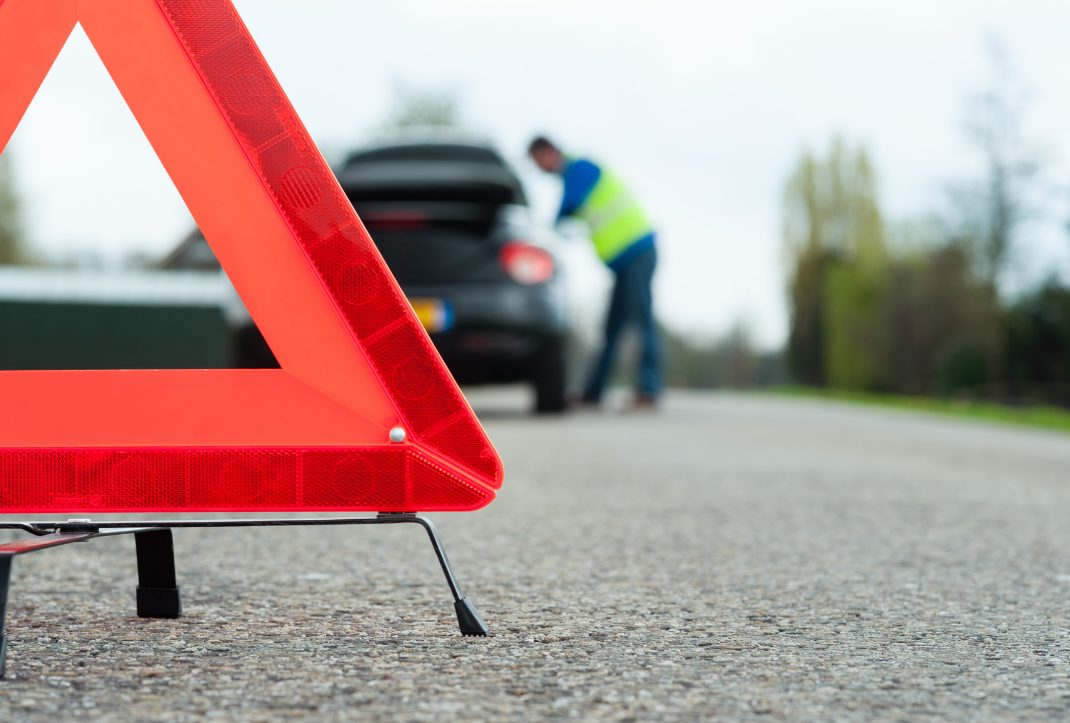
| Reflective triangles or flares | Placed a safe distance behind the vehicle, especially useful at dawn, dusk, or night |
| Bright cloth or item tied to the antenna or mirror | Adds visibility in daylight when hazards are hard to see against sun glare |
| Flashlight or phone light | Waved or flashed toward an approaching vehicle at night |
Even on quiet rural roads, traffic does pass eventually - logging trucks, mail routes, other travellers. Make your vehicle impossible to miss, and resist the urge to flag someone down by standing in the road; wave from the shoulder instead.
Satellite Communicators
If you drive rural or remote routes with any regularity, a satellite communicator is worth the investment - it’s the one tool that works precisely where cell service doesn’t. These small devices (some standalone, some built into newer phones as an emergency satellite feature) let you send an SOS or a basic text message via satellite, even with zero cell bars. For anyone regularly on logging roads, northern highways, or backcountry routes, this closes the exact gap that causes the most dangerous rural breakdowns: needing help and having no way to call for it.
If you don’t own a dedicated device, check whether your phone has a built-in satellite SOS feature - several newer smartphone models now include this, and it’s worth knowing how to use it before you need it, not during an emergency.
When You Do Reach Signal or Help Arrives
Once you’re back in coverage or a passing vehicle stops, your next call depends on the situation. For a straightforward mechanical breakdown, your own tow provider, CAA (dial *222 from a cell if you’re a member), or a tow truck found near you is the right call. If there’s an injury or the vehicle is in a dangerous position, 911 takes priority the moment you have signal. Ontario drivers on 400-series highways can also reach the OPP directly at *OPP (*677).
Rural tows often cost a bit more than urban ones simply because of the distance involved - winching or a longer haul adds to the bill, and remote-area or after-hours premiums are common in this industry. The towing cost calculator gives you a reasonable estimate before the truck arrives, and if your vehicle is genuinely stuck rather than just broken down - in a ditch, on soft shoulder, or high-centred - that’s a winch-out recovery rather than a standard tow.
FAQ
Is it ever okay to walk for help if I have no cell signal? Only if you can clearly see a specific, reachable destination and conditions are safe. Otherwise, stay with your vehicle - it’s more visible than you are on foot, and it’s where any search effort will start looking.
How do satellite communicators actually work with no cell towers nearby? They connect directly to satellite networks instead of cell towers, letting you send an SOS or short message from almost anywhere with a clear view of the sky. Some are standalone devices; some are built into newer smartphones.
What if I have half a signal bar that keeps dropping? Try texting instead of calling - texts can sometimes get through on a weak signal that won’t sustain a voice call. Move to higher ground or away from trees if it’s safe to do so, since elevation and obstruction affect rural coverage a lot.
Should I keep the engine running while I wait in a remote area? In cold weather, running it in short bursts for heat is reasonable, as long as the exhaust is clear and a window is cracked. Conserve fuel if the wait could be long, since you may need it again later.
Does a rural tow cost more than a city tow? Often yes, mainly due to distance and sometimes winching if you’re off the road surface. Expect the standard $75–$150 hook-up plus $3–$5/km to add up faster on a long rural haul - the towing cost calculator can give you a realistic range.