
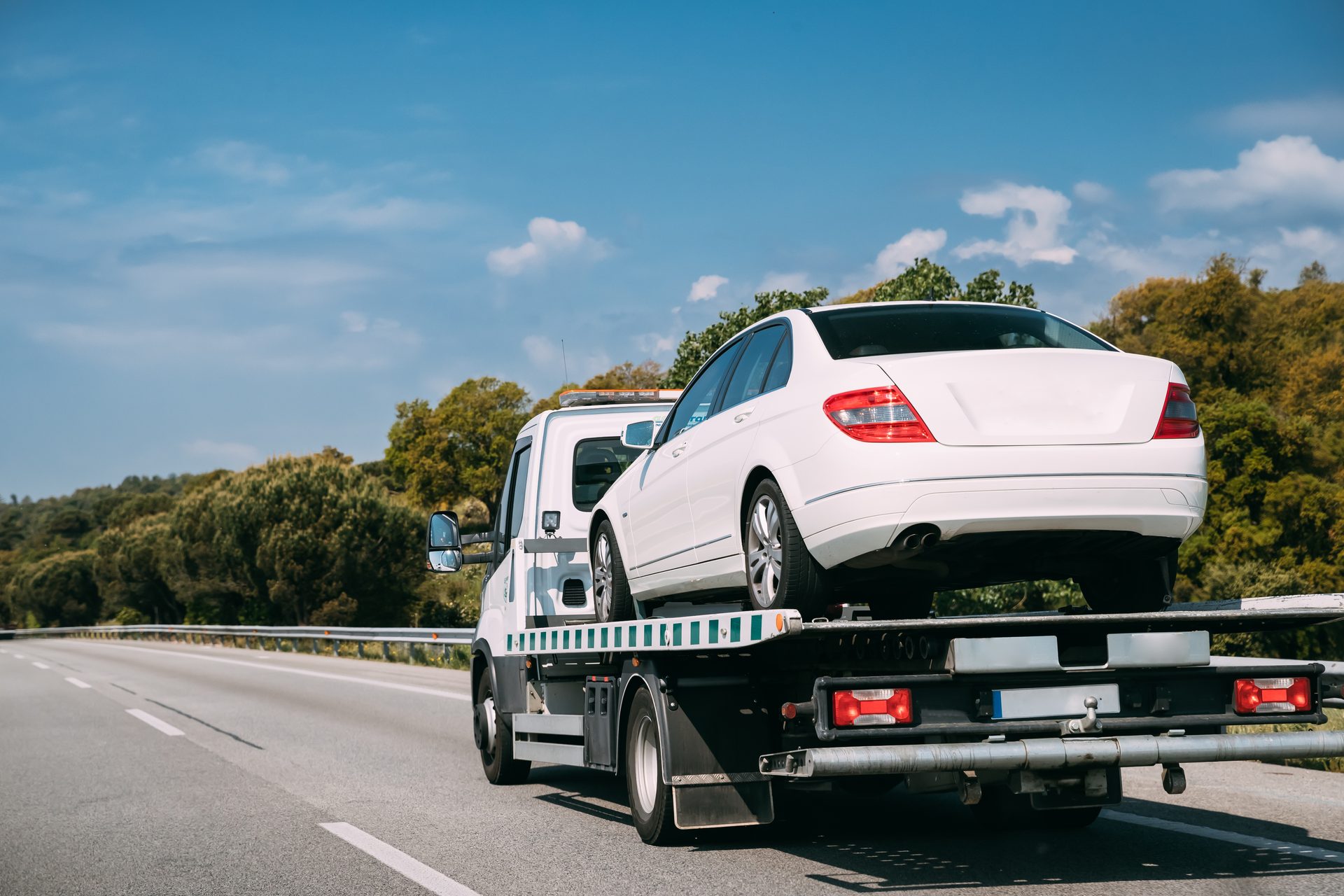
The dispatcher on the phone just asked what kind of vehicle you have and whether it’s AWD - and if you’ve never thought about it before, that question might feel like it’s coming out of nowhere. It’s not a formality. The answer determines which truck they send, and getting it wrong can mean real damage to your drivetrain. Here’s what the two main tow types actually do differently.
How Wheel-Lift Towing Works
A wheel-lift tow truck uses a hydraulic arm with a yoke that cradles two wheels - typically the front pair - and lifts them off the ground, while the other two wheels stay rolling on the road behind. It’s a fast, simple setup: the driver backs up, positions the yoke under the tires, lifts, and locks the vehicle in place before pulling away.
Wheel-lift is the workhorse of everyday towing. It’s quick to hook up, quick to release, and cheaper to operate, which generally makes it a faster and less expensive option for a straightforward tow.
How Flatbed Towing Works
A flatbed tow truck has a full deck that hydraulically tilts down to ground level, lets the vehicle be driven or winched onto it, then tilts back to horizontal for transport. The entire vehicle rides on the deck - no wheels touch the road at all during the tow.
Because nothing is rolling, there’s zero drivetrain stress and zero risk of scraping a low-hanging front or rear bumper against the road during hook-up, which matters for lowered vehicles too. It takes a little longer to load and typically costs somewhat more than a wheel-lift tow, but it’s the safer option any time the vehicle itself is a concern - mechanically, structurally, or in terms of ground clearance.
The AWD and EV Rule
This is the part that actually matters most: most all-wheel-drive and electric vehicles require flatbed towing, not wheel-lift.
For AWD vehicles, towing two wheels while the other two roll on the ground can force the drivetrain to try to reconcile mismatched wheel speeds - the wheels being towed aren’t moving while the ones on the ground are - and that mismatch can strain or damage the transmission and differential components depending on the vehicle’s specific AWD system. Manufacturers commonly specify flatbed-only towing for AWD models for exactly this reason.
For EVs, the concern is different but the rule is the same: many electric vehicles have motors integrated into or connected to the wheels in ways that make rolling any wheels during a tow risky for the drive system, and towing the wrong way on some EVs can even cause damage or trigger warnings. When in doubt with an EV, flatbed is the default-safe answer.
If you’re not sure whether your vehicle is AWD, check your registration, your manufacturer’s badge, or your owner’s manual - and if you genuinely can’t confirm it on the spot, tell the dispatcher “I’m not sure if it’s AWD” rather than guessing wrong. A flatbed handles any vehicle safely; a wheel-lift does not handle every vehicle safely.
When Wheel-Lift Makes Sense
Wheel-lift remains a perfectly good, often better choice for:
- Front-wheel-drive (FWD) or rear-wheel-drive (RWD) vehicles being towed a short distance
- Situations where speed matters and cost is a bigger factor
- Simple local tows where the vehicle isn’t disabled in a way that risks further damage
For a FWD sedan going a few kilometres to the nearest shop, wheel-lift is usually the sensible, cost-effective call - there’s no drivetrain risk and it gets the job done faster.
Cost and Speed Comparison
| Factor | Wheel-Lift | Flatbed |
|---|---|---|
| Best for | FWD/RWD vehicles, short local tows | AWD/EVs, longer distance, low-clearance or damaged vehicles |
| Hook-up speed | Faster | Slower (deck tilt, loading) |
| Typical cost | Often cheaper | Often somewhat higher |
| Drivetrain risk | Possible on AWD/4WD if used incorrectly | None - no wheels touch the road |
| Ground clearance risk | Some, on lowered vehicles | None |
| Availability | Very common | Common but not universal - confirm with dispatcher |
Both fall within the standard towing pricing structure - a hook-up fee plus a per-km rate, with the specific total depending on your distance and situation. See our towing cost calculator for a realistic range before the truck arrives.
What to Tell the Dispatcher
When you call for a tow, give the dispatcher these details up front so they send the right truck the first time - a wrong-truck dispatch just means a longer wait while a second truck gets sent out:
- Make, model, and year of the vehicle
- Whether it’s AWD, 4WD, FWD, or RWD - if you’re not sure, say so, and mention if it’s electric
- Condition of the vehicle - will it roll freely, or are the wheels locked/damaged?
- Ground clearance concerns - is it lowered, or did the damage affect the undercarriage?
- Pickup and destination locations
Giving accurate info here isn’t just about avoiding delay - sending a wheel-lift truck for a vehicle that needed a flatbed can mean real, sometimes expensive drivetrain damage that shows up after the tow, not during it.
Other Situations Where Flatbed Is the Safer Call
Beyond AWD and EVs, a few other situations usually call for a flatbed even if your vehicle is a standard FWD or RWD model:
- Long-distance tows. The farther the vehicle travels, the more any drivetrain stress from wheel-lift towing can compound, so flatbed is often the safer and sometimes the required choice for longer hauls.
- Vehicles with existing mechanical damage. If the accident or breakdown affected the axle, transmission, or wheels themselves, rolling those wheels during a wheel-lift tow can make the damage worse.
- Lowered or modified vehicles. Reduced ground clearance raises the risk of scraping a bumper or splitter during wheel-lift hook-up; a flatbed avoids that entirely since the vehicle is driven or winched up a ramp rather than lifted from underneath.
- Classic or high-value vehicles. Owners often specify flatbed regardless of drivetrain simply to minimize any risk to a vehicle that’s expensive or difficult to replace.
If you’re unsure which applies to your situation, it costs nothing to ask the dispatcher directly which truck they’d recommend for your specific vehicle and circumstances - a good operator would rather ask a clarifying question than send the wrong equipment.
FAQ
Can wheel-lift towing damage an AWD car? Yes, potentially. Towing an AWD vehicle with two wheels lifted and two rolling can create a wheel-speed mismatch that strains the transmission and differential, depending on the specific AWD system. Most AWD vehicles should be flatbed towed instead.
Why do EVs need flatbed towing? Many EVs have drive motors connected to the wheels in ways that make rolling any wheel during a tow risky for the drive system, and towing incorrectly can cause damage or trigger fault warnings. Flatbed avoids this entirely by keeping all wheels off the ground.
Is flatbed towing always more expensive than wheel-lift? It’s often somewhat more, reflecting the larger truck and longer loading process, but the difference is usually modest relative to the total tow cost - and it’s the correct, safer choice for many vehicles regardless of price. Confirm current pricing with your operator; see flatbed towing for more detail.
What if I don’t know whether my car is AWD? Check your vehicle registration, dashboard or badge markings, or your owner’s manual. If you still can’t confirm it when you call for a tow, tell the dispatcher you’re unsure - they can often identify it by make and model, or default to a flatbed to be safe.
Can a wheel-lift truck tow a car with flat or damaged tires? It depends on the damage - a wheel-lift can sometimes handle a flat tire fine, but significant wheel or axle damage often requires a flatbed since the wheels may not roll safely at all. Describe the damage clearly to the dispatcher so they send the right equipment.
Ready to book a tow? Find a tow truck near you and mention your vehicle’s drivetrain when you call, or check the towing cost calculator for a realistic estimate first.