
Your all-wheel-drive SUV won’t start, and the tow truck that shows up first is a standard wheel-lift rig - and you’re not sure if that’s a problem or if you’re overthinking it. It’s a real problem, and it’s one of the most common expensive mistakes in roadside towing. Here’s what actually happens inside an AWD or 4x4 drivetrain during the wrong kind of tow, and how to make sure it doesn’t happen to your vehicle.
Why AWD and 4x4 Drivetrains Are Different
A front-wheel-drive or rear-wheel-drive car has one axle doing the driving and one just along for the ride - towing it with two wheels up and two rolling on the ground isn’t ideal, but it’s usually tolerable for a short local tow. AWD and 4x4 systems are built completely differently: power is meant to flow to all four wheels together, coordinated through a transfer case, differentials, and in many modern systems, electronic sensors constantly comparing wheel speeds.
When a wheel-lift tow lifts two wheels off the ground while the other two keep rolling with the vehicle in motion, the system sees a wheel-speed mismatch it was never designed to tolerate outside of normal driving conditions. Depending on the specific AWD or 4x4 system, this can strain or damage the transfer case, differential, or transmission - sometimes immediately, sometimes as a slower failure that shows up weeks later and gets blamed on something else entirely.
The Flatbed Rule
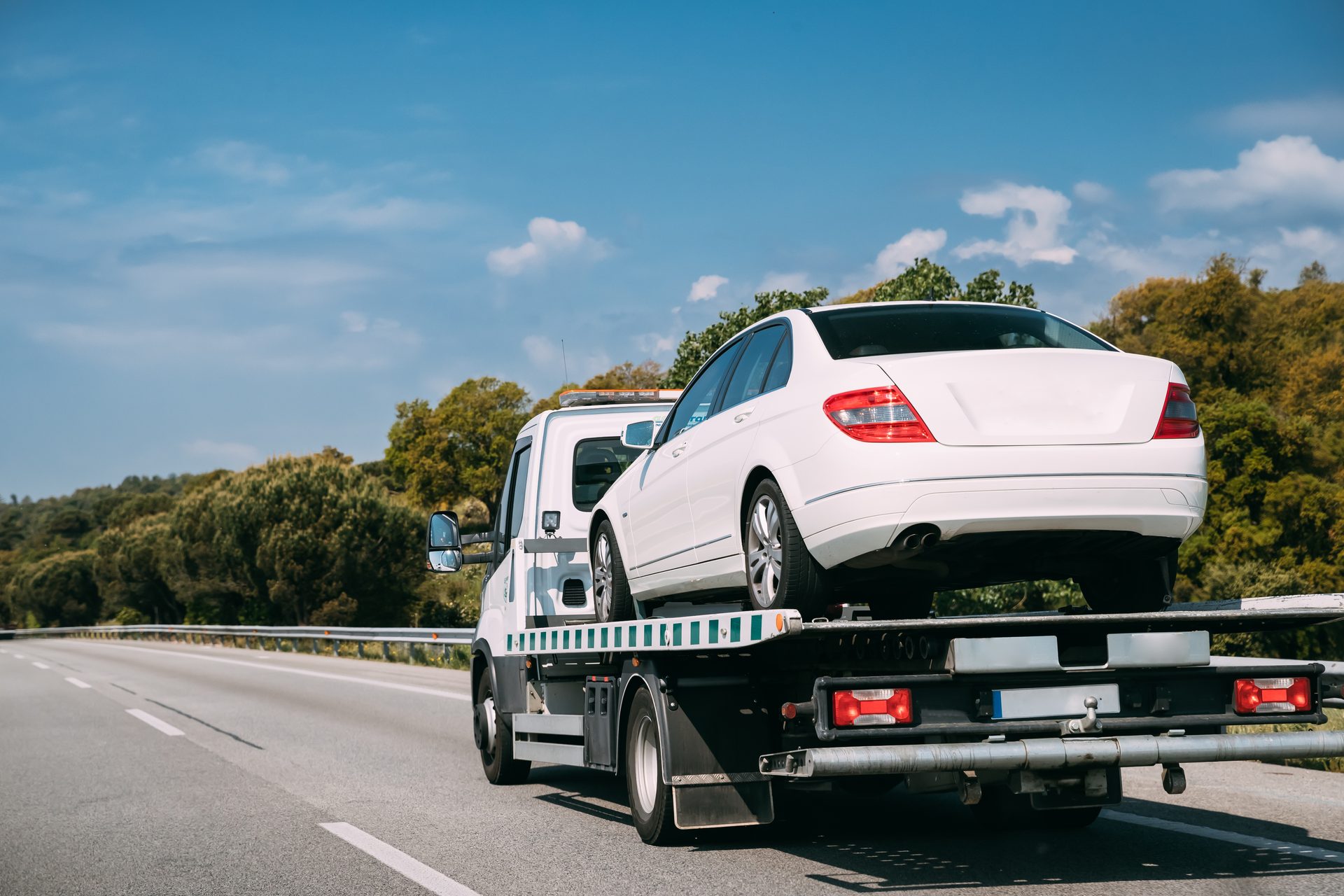
This is the rule to remember: most AWD and 4x4 vehicles should be towed on a flatbed, not a wheel-lift. A flatbed tow truck carries the entire vehicle on a deck - no wheels touch the ground, no wheel-speed mismatch, no drivetrain stress at all. It’s the universally safe option regardless of your specific drivetrain system, which is why it’s the default answer whenever there’s any doubt.
Manufacturers generally spell this out in the owner’s manual, sometimes explicitly forbidding wheel-lift towing altogether for AWD and 4x4 models. If you’re not sure what your manual says, treat flatbed as the assumed correct answer and confirm it with the dispatcher rather than guessing the other way.
What About Tow Dollies?
A tow dolly lifts one axle (usually the front) onto a small trailer while the other axle still rolls on the ground behind it - commonly used for long-distance moves rather than roadside breakdowns. The same wheel-speed mismatch problem that makes wheel-lift towing risky for AWD applies to dollies too: if the vehicle has power going to all four wheels, putting two of them on a stationary dolly while the other two roll on the highway can still strain the drivetrain.
Some AWD and 4x4 vehicles can be safely dolly-towed only after disconnecting a driveshaft or engaging a specific tow mode - a job for a mechanic or an experienced operator, not something to attempt roadside. Unless you know your specific vehicle explicitly supports dolly towing, treat a dolly the same way you’d treat a wheel-lift: assume it’s not appropriate and ask for a flatbed instead.
Comparing Your Options
| Method | Wheels off ground | Safe for AWD/4x4? |
|---|---|---|
| Flatbed | All four | Yes - always safe |
| Wheel-lift | Two | Usually not - check manufacturer specs first |
| Tow dolly | Two (one axle) | Usually not, unless driveshaft is disconnected or vehicle explicitly supports it |
| All-wheel dolly / trailer | All four | Yes - functions like a flatbed |
What to Tell Dispatch
When you call for a tow and your vehicle is AWD or 4x4, give the dispatcher this information clearly, before the truck is chosen and sent:
- “This is all-wheel drive” or “this is a 4x4” - say it plainly, don’t wait to be asked
- Make, model, and year, so the dispatcher can cross-reference if they’re unsure of your specific drivetrain
- Whether the vehicle can be shifted into neutral and rolled, if you know - some 4x4 systems need to be in a specific mode before any movement, even on a flatbed ramp
- Explicitly ask for a flatbed if you’re at all unsure whether they’ve registered the AWD/4x4 detail
A good dispatcher will already ask about drivetrain when you call - if they don’t, volunteer it. It’s a thirty-second conversation that can save you a transmission repair.
What Happens If It’s Towed Wrong
Damage from an incorrect wheel-lift or dolly tow doesn’t always show up immediately. Sometimes it’s an unusual noise a few days later, a warning light, or a rougher shift - by which point it’s easy for a shop to misattribute it to normal wear rather than the tow. If you’re ever unsure whether a past tow was done correctly and your vehicle has started acting up since, mention the tow specifically when you describe the symptoms to a mechanic, since the timeline is a useful clue.
Cost Considerations
Flatbed towing is often somewhat more expensive than wheel-lift, reflecting the larger truck and slightly longer loading time, but the difference is modest against the total cost of a tow - and trivial compared to a drivetrain repair bill if the wrong method causes damage. Standard pricing structure applies either way: a hook-up fee plus a per-kilometre rate, with your total depending on distance and situation. Check the towing cost calculator for a realistic range before the truck arrives.
Not All AWD Systems Are Identical
It’s worth understanding that “AWD” and “4x4” cover a range of different engineering approaches, not one single standard - which is exactly why the manufacturer’s manual matters more than general advice. Some systems use a viscous coupling or clutch pack that can tolerate brief wheel-speed differences better than others. Some part-time 4x4 systems can be safely towed in two-wheel-drive mode with the transfer case in neutral, provided that’s done correctly. Others have no tolerance at all and specify flatbed-only towing without exception.
The practical takeaway isn’t that you need to become an expert in your specific drivetrain’s engineering - it’s that “AWD” or “4x4” alone isn’t enough detail for a dispatcher or operator to assume anything with confidence. When in doubt, flatbed remains the universally safe default regardless of which specific system your vehicle uses, which is why operators lean toward recommending it whenever the details aren’t confirmed.
FAQ
Can a wheel-lift truck safely tow my AWD vehicle? Usually not for more than a very short distance, and many manufacturers advise against it entirely. The wheel-speed mismatch between the lifted and rolling wheels can strain the transfer case, differential, or transmission. Flatbed is the safer default.
How do I know if my vehicle is AWD or 4x4? Check your vehicle registration, badge markings, or owner’s manual. If you’re still unsure when you call for a tow, say so - the dispatcher can often confirm by make and model, or default to flatbed to be safe.
Is a tow dolly safe for AWD vehicles? Generally not, unless your specific vehicle explicitly supports it (sometimes after disconnecting a driveshaft) - the same wheel-speed mismatch risk applies as with wheel-lift towing. Assume it’s not appropriate unless you know otherwise.
Does flatbed towing cost more for AWD vehicles? It’s often somewhat more than wheel-lift towing generally, but the difference is modest relative to the total tow cost - and far cheaper than repairing drivetrain damage from an incorrect tow.
What if my AWD car was already towed the wrong way - how would I know? Watch for unusual noises, warning lights, or rough shifting in the weeks after the tow. If anything seems off, mention the specific tow to your mechanic so they can check the transfer case and differential rather than assuming general wear.
If your AWD or 4x4 breaks down, find a tow truck near you and lead with the drivetrain detail when you call, or check flatbed towing directly to confirm the right truck gets dispatched the first time.