
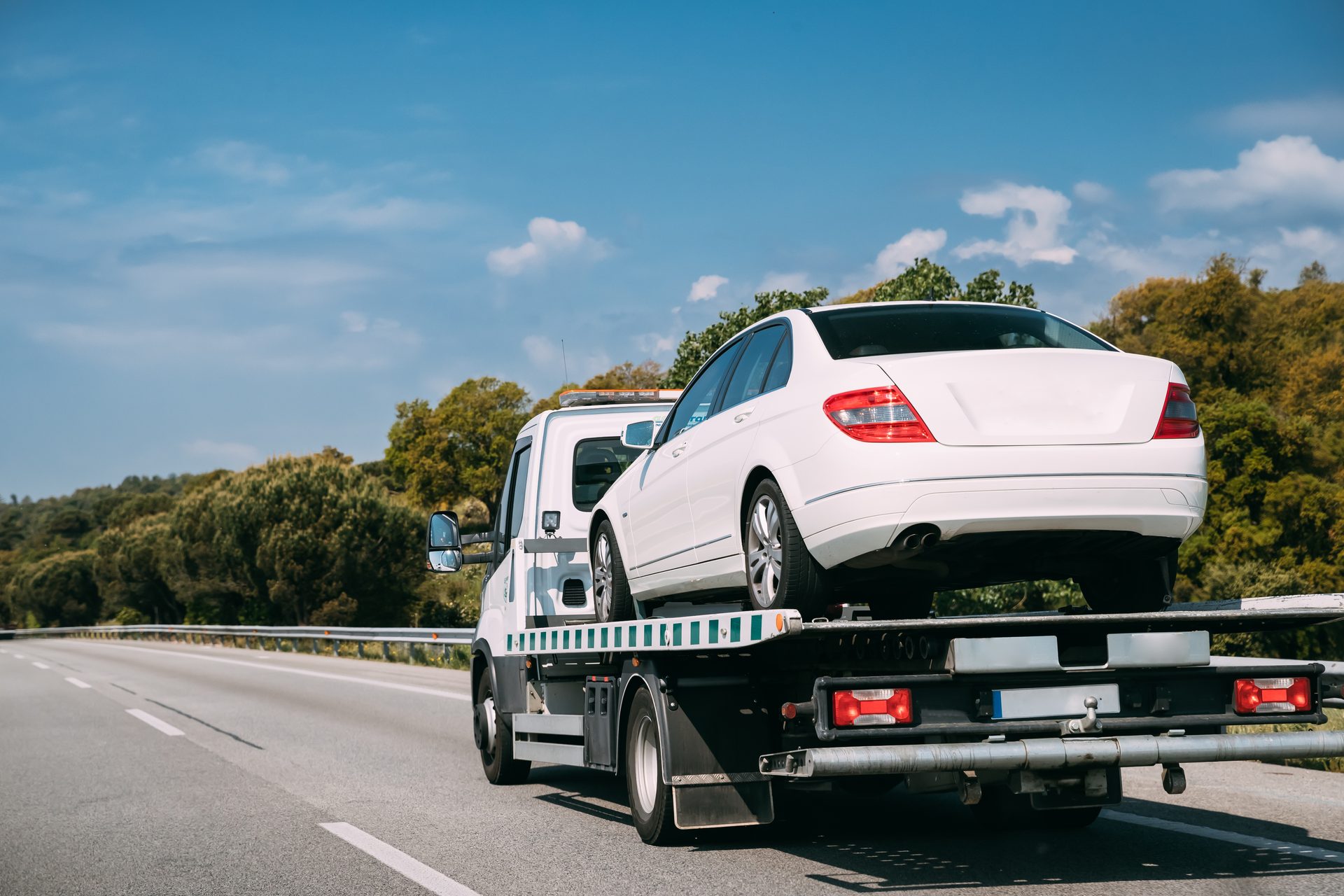
Your EV has stopped responding and you’ve called for a tow, and now you’re wondering whether it needs anything different from towing a regular car - no engine, after all, so how complicated can it be? More than you’d expect. EVs need their own set of rules, and getting it wrong risks damage that’s expensive precisely because the drive components are so integrated into the vehicle’s electronics. Here’s what actually happens when an EV gets towed correctly.
Why EVs Almost Always Need a Flatbed
In a gas vehicle, the wheels connect to a transmission that’s disengaged when the car is off. In many EVs, the electric drive motor is directly connected to the wheels with no traditional transmission or clutch to fully disengage the connection. That means if the wheels turn - like they would during a wheel-lift tow - the motor can be forced to spin along with them, even with the vehicle powered down.
Spinning a drive motor that isn’t meant to be turning during a tow can generate unwanted electrical current, strain internal components, and in some cases cause real damage to the drive unit or trigger fault codes that require a dealer visit to clear. Because this risk applies broadly across EV models - not just a few of them - the safe, general rule is: flatbed towing is almost always required for EVs, full stop, no wheels touching the ground during transport.
This is the same underlying physics as the AWD drivetrain rule, just applied to an electric drive system instead of a mechanical one - and it’s why EV towing deserves its own conversation with dispatch rather than being treated like any other car.
What to Tell Dispatch
When you call for a tow and you’re driving an EV, be explicit and early about it:
- Say “this is an electric vehicle” up front, don’t assume they’ll ask
- Give the make and model - dispatchers and drivers increasingly know EV-specific handling, but confirming the model helps them prep the right equipment
- Confirm the truck being sent is a flatbed, not a wheel-lift, before it’s dispatched
- Mention if the vehicle won’t shift into a neutral or tow-ready mode, since some EVs require a specific procedure (sometimes through the touchscreen, sometimes requiring a specific key sequence) before they can be safely rolled onto a ramp
A dispatcher who’s used to working with EV towing will usually confirm the truck type without prompting - but don’t assume that’s automatic everywhere, especially in areas with less EV density.
Dead-Battery EV Realities
A gas car with a dead 12-volt battery is a five-minute boost. A dead EV is a different situation, and it’s worth understanding before it happens to you:
- The high-voltage traction battery (the one that powers the drive motor) and the small 12-volt battery (the one that runs the electronics, locks, and infotainment) are separate systems. A dead 12-volt battery on an EV can sometimes be boosted similarly to a gas car, which can restore basic functions like unlocking the vehicle - but it does not recharge the traction battery.
- If the traction battery itself is fully depleted, there’s no roadside “boost” that fixes that - an EV with a genuinely dead main battery needs to be towed to a charging station or service centre, not jump-started.
- A depleted EV may not shift into neutral on its own, since that function often runs through the same electronics the dead battery affects - this is exactly the kind of situation where flatbed towing (no need to move the vehicle under its own power at all) becomes essential rather than optional.
- Range anxiety breakdowns are different from mechanical breakdowns. If you’re simply out of charge rather than experiencing a fault, the practical fix is a tow to the nearest charging station, not a repair.
EV Towing at a Glance
| Situation | What typically applies |
|---|---|
| Standard breakdown or won’t-start EV | Flatbed towing, no wheels rolling |
| Dead 12-volt battery | Sometimes boostable for basic functions; doesn’t recharge the traction battery |
| Fully depleted traction battery | Tow to charging station or service centre - no roadside “boost” fixes this |
| Vehicle won’t shift to neutral | Flatbed avoids needing to move the vehicle under its own power at all |
| Post-collision EV towing | Flatbed, plus extra caution - mention any visible battery pack damage to the operator |
A Note on Post-Collision EV Towing
If your EV has been in a collision, mention any signs of damage near the underbody or battery pack area to the tow operator when they arrive - this isn’t about panic, it’s about giving the operator the information they need to handle the vehicle appropriately during loading and transport. Post-collision towing is generally covered under your collision or DCPD auto insurance, and you retain the right to choose your accident recovery destination the same as with any other vehicle - EV or not.
Cost Considerations
Because flatbed is close to mandatory for EVs, expect flatbed-level pricing rather than the cheaper wheel-lift option, following the standard structure of a hook-up fee plus a per-kilometre rate. If your EV needs a longer tow to reach a charging station or an EV-capable service centre, that distance adds to the total. Check the towing cost calculator for a realistic estimate based on your distance.
What Owners Can Do Ahead of Time
A little preparation makes an EV breakdown less stressful when it happens:
- Know how to put your specific EV into “tow mode” or neutral, if it has one - check your owner’s manual now rather than searching for it roadside on a phone with low signal
- Save your manufacturer’s roadside number, since many EV makers run dedicated roadside programs during the warranty period, similar to gas vehicles, and their dispatchers are typically well-versed in EV-specific handling
- Know your nearest charging options along routes you drive regularly, so a low-charge situation doesn’t turn into a full breakdown call in the first place
- Mention “electric vehicle” as the very first thing you say when calling any towing service, not partway through the conversation, so the right truck gets dispatched from the start
None of this prevents a breakdown, but it shortens the time between the call and the right truck showing up - which matters more with EVs than gas vehicles, since sending the wrong equipment (a wheel-lift instead of a flatbed) risks real damage rather than just an inconvenience.
FAQ
Can an EV be towed with a wheel-lift truck? Almost never recommended - most EVs have drive motors directly connected to the wheels, and rolling them during a tow can strain or damage the drive unit. Flatbed is the standard, safe method.
Can you jump-start an EV with a dead battery? It depends which battery is dead. The small 12-volt battery can sometimes be boosted to restore basic functions like unlocking, but this doesn’t recharge the main traction battery that powers the drive motor - a depleted traction battery needs a tow to a charging point instead.
What happens if an EV runs completely out of charge? It needs to be towed to the nearest charging station or service centre - there’s no roadside equivalent of carrying a gas can for an EV’s main battery. A flatbed tow is the standard method.
Does towing an EV cost more than towing a gas car? Not inherently more per kilometre, but since EVs almost always require flatbed towing rather than the sometimes-cheaper wheel-lift option, expect flatbed-level pricing as the baseline.
Do I need to say my car is electric when I call for a tow? Yes - say it up front and confirm a flatbed is being dispatched. This ensures the right truck arrives the first time instead of a wheel-lift truck showing up and needing to be swapped out.
If your EV needs a tow, find a tow truck near you and confirm flatbed service directly, or check EV towing for operators who specifically list electric vehicle handling.