
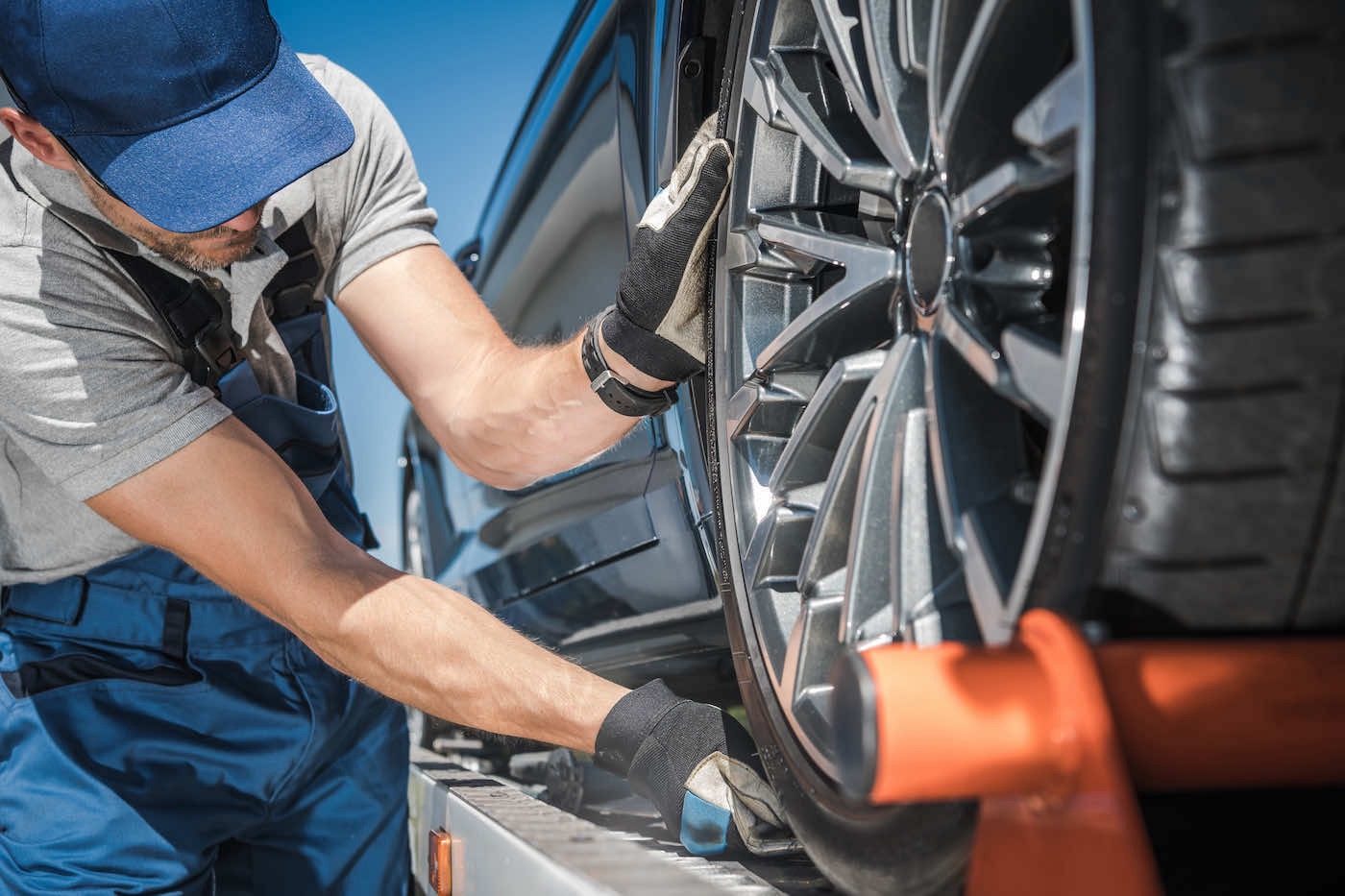
That thump-thump-thump, or the sudden pull to one side, means you’ve got a flat - and now you’ve got a decision to make. In a quiet parking lot, changing it yourself is usually straightforward. On a highway shoulder with traffic screaming past at 100 km/h, it’s a genuinely different and more dangerous situation. Here’s how to tell the difference, and how to do it safely when it is the right call.
First: Decide If You Should Change It Yourself At All
This isn’t just a skill question - it’s a location and equipment question.
Call a professional instead of changing it yourself if:
- You’re on a highway shoulder, especially a busy one. Changing a tire that close to high-speed traffic is genuinely dangerous - roadside workers and stranded drivers are struck every year in exactly this situation. Stay in the vehicle with your seatbelt on, as far onto the shoulder as possible, and call for help rather than getting out to work beside live traffic.
- You don’t have a spare. Many newer vehicles don’t carry a full spare anymore - some have a tire inflator kit only (which doesn’t help with a sidewall tear or a completely destroyed tire), and some have no backup at all beyond run-flat tires. Check your trunk or owner’s manual before you’re in this situation, ideally before you need it.
- The damage is more than a simple puncture - a shredded sidewall, a bent wheel, or damage from a pothole hit can mean the spare won’t mount properly or the car isn’t safe to drive even on a spare.
- Conditions are bad - poor visibility, no safe shoulder width, night with limited lighting, or you simply don’t feel safe getting out of the car.
- You don’t have the tools, or they’re missing/damaged, which happens more than you’d think with vehicles that rarely get their trunk kit checked.
If any of those apply, stay put, stay visible, and find a tow truck or roadside operator near you rather than attempt it. A roadside tire change service typically runs in a similar range to other roadside calls, and a tow if the vehicle can’t be made driveable is commonly $100–$250 total locally - use the towing cost calculator for a general estimate.
If It’s Safe: How to Change a Flat Tire
You’ll need: the spare tire, the jack, the lug wrench, and ideally your owner’s manual for vehicle-specific jack points.
1. Find a Safe, Level Spot
Pull well off the road onto flat, stable ground - a parking lot, wide shoulder, or driveway is ideal. Avoid soft shoulders, inclines, or anywhere close to the travel lane. Turn on your hazards the moment you notice the flat, even before you find a spot to stop.
2. Secure the Vehicle
- Put the transmission in park (or first gear/reverse for a manual) and engage the parking brake.
- Place wheel chocks or heavy objects (a rock, a block of wood) behind the wheels diagonally opposite the flat to prevent rolling.
- Turn off the engine.
3. Loosen the Lug Nuts - Before Jacking Up
Loosen each lug nut about a quarter to half turn while the tire is still on the ground and bearing weight - this is much harder to do once the wheel is off the ground and spinning freely. Don’t remove them yet.
4. Position and Raise the Jack
Check your owner’s manual for the correct jack point - usually a reinforced spot along the vehicle’s frame near the flat tire, not just any point on the body panel. Raise the vehicle until the flat tire is a few centimetres off the ground.
5. Remove the Lug Nuts and Tire
Finish unscrewing the lug nuts by hand, keep them somewhere they won’t roll away, then pull the flat tire straight off the wheel hub.
6. Mount the Spare
Line up the spare with the wheel bolts and push it on. Thread the lug nuts back on by hand first, then tighten them a bit at a time in a star pattern (not straight around) to seat the wheel evenly.
7. Lower the Vehicle and Fully Tighten
Lower the jack until the tire touches the ground but still has some weight off it, then fully tighten the lug nuts in that same star pattern. Lower the car completely and do one more full pass on all the lug nuts once it’s fully on the ground - this final tightening at full weight matters.
8. Check the Spare and Get to a Shop
Most spares, especially compact “donut” spares, are rated for limited speed (often around 80 km/h) and limited distance (often around 100 km). They’re a get-you-to-a-shop solution, not a permanent fix. Get the flat repaired or replaced, and get the lug nuts re-torqued properly, as soon as you reasonably can.
Quick Reference Table
| Situation | What to do |
|---|---|
| Flat in a parking lot, spare available, tools present | Safe to change yourself following the steps above |
| Flat on a highway shoulder | Stay in the vehicle, hazards on, call a professional |
| No spare in the vehicle | Call a professional - inflator kits don’t fix all flat types |
| Shredded sidewall or bent wheel | Call a professional - a spare may not resolve it |
| Poor visibility, night, unsafe shoulder | Call a professional regardless of your skill level |
While You Wait for Help on a Shoulder
If you’ve decided (correctly) that the roadside isn’t safe to work on:
- Stay inside the vehicle with your seatbelt fastened, doors locked, unless there’s a specific reason (fire risk, unsafe location) to exit and move well away.
- Keep hazards on the entire time.
- If you have reflective triangles or flares and it’s safe to place them without walking near traffic, they add visibility - but don’t risk walking along a live shoulder to place them if traffic is heavy or fast.
- Call for a tow or a mobile tire change service and give them your exact location, including mile markers or nearby exits if you’re on a highway.
FAQ
Is it safe to change a tire on a highway shoulder myself? Generally no, especially on busy or high-speed roads. Stay in the vehicle with hazards on and call a professional - being outside the car that close to live traffic carries real risk.
Do all cars still come with a spare tire? No - many newer vehicles carry only a tire inflator kit, or no backup at all beyond run-flat tires. Check your trunk or owner’s manual before you need to find out roadside.
How fast and how far can I drive on a compact spare? Most compact “donut” spares are rated for roughly 80 km/h and roughly 100 km - enough to get to a shop, not a long-term replacement. Get the flat properly repaired or replaced promptly.
What if my lug nuts won’t loosen? Don’t force it dangerously - a cheater bar or extra leverage can work, but if they’re seized or you’re not confident, that’s a reasonable point to call for professional roadside help instead of risking an injury or a stripped bolt.
What does it cost to have someone else change my tire? Roadside tire change service pricing is generally in line with other roadside calls; if the vehicle can’t be made driveable and needs a shop, a local tow commonly runs $100–$250 total. Confirm the exact price with the operator before they start.
Changing a tire yourself is a fine skill to have for the right situation - a quiet lot, a good spare, decent light. For anything riskier, find a tow truck or roadside operator near you rather than gamble on a highway shoulder.