
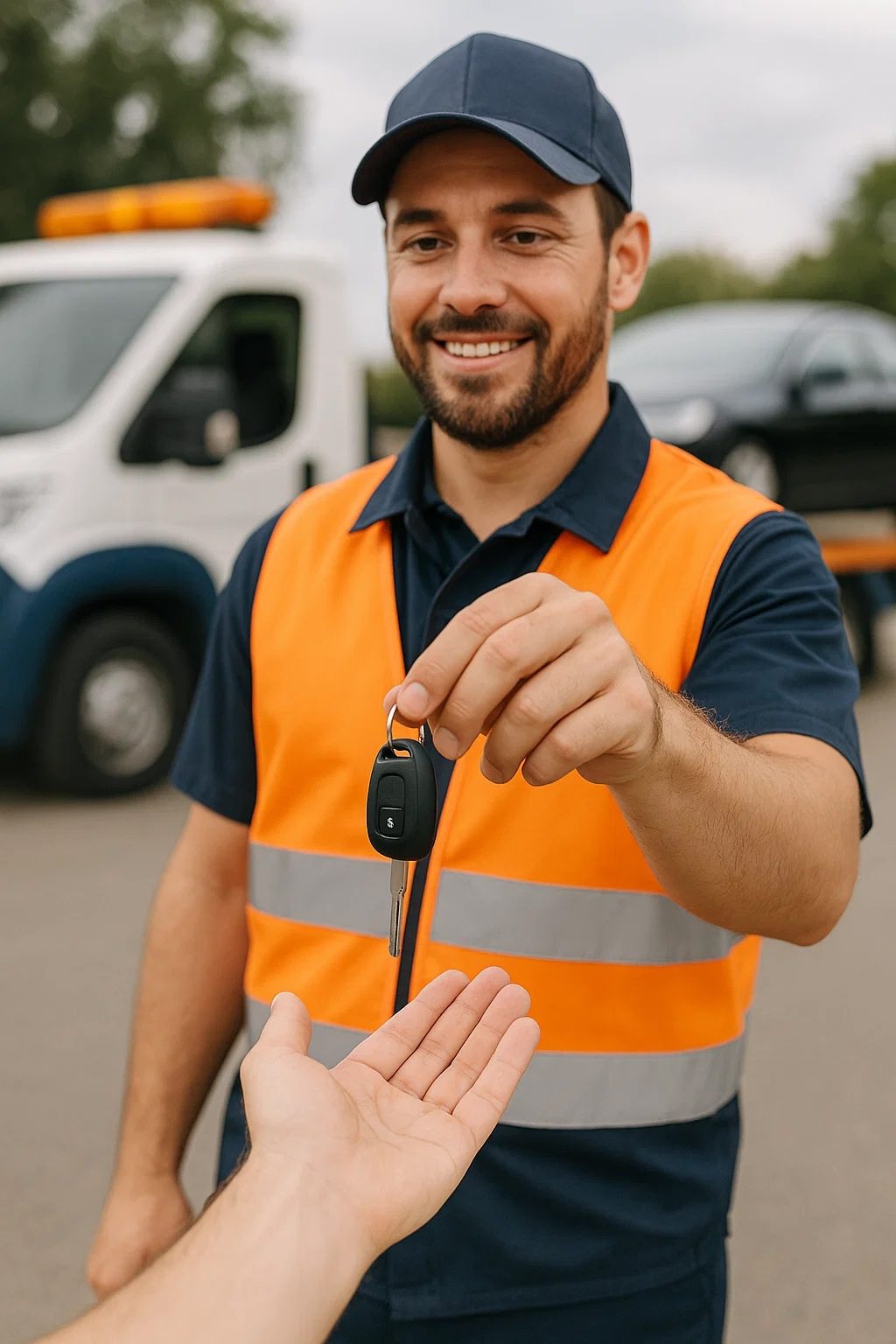
You shut the door, heard that unmistakable click, and immediately spotted the keys sitting right there on the seat. It happens to careful people constantly, and the panic to fix it fast can push you toward the wrong option. Here’s what actually works, ranked by what it’ll cost you.
First: Is It Actually an Emergency?
Before anything else, quickly assess the situation:
- Is a child or pet locked inside? This changes everything - call 911 immediately. Emergency services can break a window if needed, and that’s the right call over any cost consideration.
- Are you somewhere unsafe (isolated area, bad weather, unlit lot late at night)? That shifts you toward the fastest reliable option rather than the cheapest.
- Otherwise, you have time to pick the right option rather than the first one you think of.
If you’re already unsure who to call, it’s worth knowing that most towing and roadside operators listed in our directory also handle lockout service directly, so you don’t necessarily need a separate locksmith search.
Option 1: DIY Methods - Free, but Riskier Than They Look
Coat hangers, slim jims, and inflatable wedge tools bought online are the classic “free” fix, but they come with real downsides:
- Modern cars have side airbag sensors and wiring near the door frame that a coat hanger or improvised tool can damage - a repair that costs far more than any lockout service would have.
- Paint and weatherstripping damage from tools jammed into the door seal is common and not always visible until later.
- Success rates on newer vehicles are low. Modern lock mechanisms and reinforced door frames make old-school DIY methods far less reliable than they were on older cars.
- If you do try a DIY method, a proper inflatable wedge and long-reach tool (not a coat hanger) is the safer version of this approach, used carefully at the top corner of the door where there’s less risk near airbag sensors.
Realistically, DIY is worth attempting only if you have the proper tools already and know what you’re doing. Otherwise the “free” option risks becoming the most expensive one.
Option 2: CAA or Club Roadside Membership - Often Included
If you’re a CAA member, lockout service is typically included as one of the standard roadside benefits across most tiers, meaning your out-of-pocket cost may be $0 beyond your annual membership. Exact inclusions vary by regional club and tier (Basic/Plus/Premier), so check your specific plan, but this is usually the cheapest real option if you already have a membership. Roughly $70–$180/yr covers a CAA membership depending on club and tier, and lockouts are one of the calls most members use it for.
Option 3: Credit Card or Insurer Roadside Add-On - Often Included, Check the Fine Print
- Some credit cards bundle a basic roadside package that includes lockout service, though typically with limits on distance or calls per year. Check your card’s certificate of insurance for what’s actually covered.
- Insurer roadside add-ons (commonly $20–$60/yr) often include lockout service too - but ask whether using it counts against your claims history before assuming it’s free to use.
- Manufacturer roadside assistance, often included for 3–5 years on a new vehicle, frequently covers lockouts as well - check your warranty booklet if your car is still relatively new.
Option 4: A Towing Operator’s Lockout Service - Fast, Predictable Price
If you don’t have a membership, or your membership’s benefits don’t apply (used up your calls for the year, or outside coverage area), a local towing or roadside operator can come out specifically for a lockout. This typically runs $50–$120, and it’s usually fast - often quicker than a locksmith, since roadside operators are already equipped and mobile. Most use non-destructive tools (air wedges, long-reach tools) that professionals are trained to use safely around airbag sensors and without damaging paint or weatherstripping. You can find a tow truck or roadside operator near you that lists lockout service, and many of the same operators also handle a battery boost or flat tire change on the same call if you need more than one thing sorted at once.
Option 5: A Locksmith - Similar Price, Sometimes Slower
A traditional locksmith can also do lockouts, generally in a similar price range to a towing operator’s lockout service, though response time can be longer if they’re not already mobile and dispatched the way roadside operators are. Locksmiths are the right call specifically if you also need a new key made or programmed (lost the only key entirely, not just locked it inside) - that’s a different, usually pricier job than a simple lockout, since it may require cutting and programming a chip key. If the vehicle also needs to be moved somewhere after the lockout is resolved - say, it’s blocking a driveway or needs a shop visit anyway - a towing cost calculator estimate can help you budget for that separately.
Cost Comparison at a Glance
| Option | Typical cost | Speed | Notes |
|---|---|---|---|
| DIY (coat hanger/wedge) | Free, but risky | Immediate if it works | Real risk of damage on modern cars; low success rate |
| CAA/club membership | Often $0 (covered by membership) | Fast | Check your tier’s inclusions |
| Credit card/insurer add-on | Often $0 (covered) | Fast to moderate | Check limits and fine print |
| Towing operator lockout service | $50–$120 | Usually fast | Non-destructive tools, mobile |
| Locksmith | Similar range | Can be slower | Needed anyway if you need a new key cut |
What to Have Ready When You Call
- Proof of ownership or ID matching the vehicle registration. Legitimate lockout services will generally ask for this before opening a locked vehicle - it’s a safeguard against helping someone break into a car that isn’t theirs.
- Your exact location, especially if you’re in a parking structure, mall lot, or somewhere with limited address precision.
- The vehicle’s make and model, since some lock mechanisms take longer or need different tools.
Preventing the Next One
- Keep a spare key with a trusted person or in a secure spot, not in the car itself.
- Some vehicles support a keypad entry code on the door - worth learning if yours has one.
- A magnetic hide-a-key box is genuinely risky (thieves know to look for them) - not recommended as your main backup plan.
FAQ
Is it safe to use a coat hanger to unlock my own car? It’s risky on modern vehicles - side airbag sensors and wiring run near the door frame, and improvised tools can damage them or the weatherstripping. A proper inflatable wedge and long-reach tool is safer, but professional lockout tools and technique reduce the risk further.
Does CAA cover lockouts? Typically yes, as one of the standard roadside benefits across most tiers, though exact inclusions vary by regional club and membership level - check your specific plan.
What’s the difference between calling a towing operator and a locksmith for a lockout? Both typically fall in a similar price range and use similar non-destructive tools. Towing operators are often faster to dispatch since they’re already mobile; locksmiths are the better call specifically if you also need a new key cut or programmed.
How much does a lockout service typically cost without a membership? Roughly $50–$120 for a straightforward lockout from a towing operator or locksmith, though it can vary by location, time of day, and vehicle type.
What if my keys are locked in the car with a child or pet inside? Call 911 immediately - this is treated as an emergency, and emergency services can break a window if necessary. Don’t wait on a roadside service call in this situation.
If you’re locked out and don’t have a membership to lean on, find a roadside operator near you that offers lockout service - most reach you fast and use tools that won’t damage your car.