
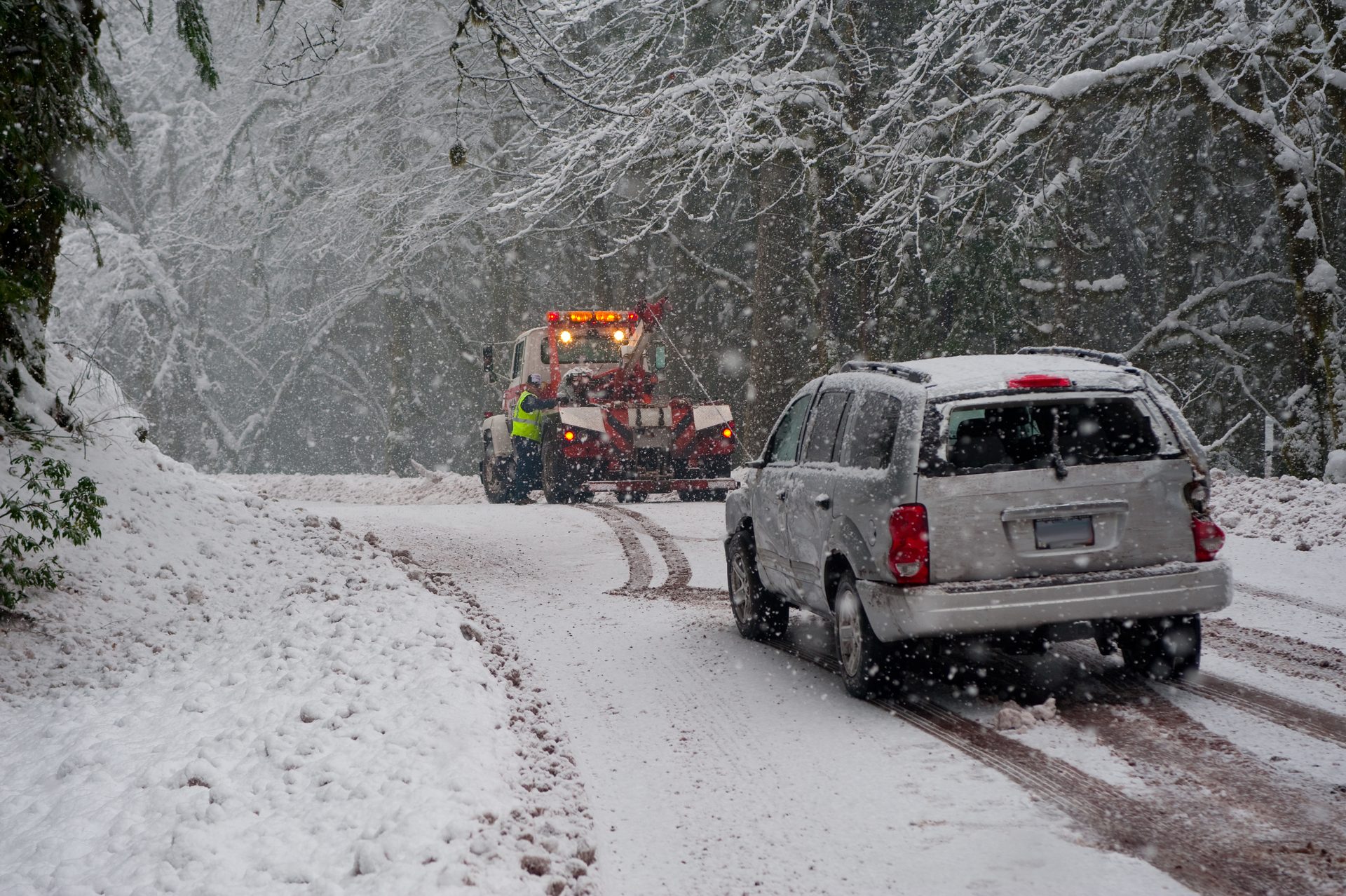
At -30°C, a breakdown stops being a mechanical inconvenience and becomes a survival situation, even if it doesn’t feel that way in the first five minutes. The math changes fast in real cold - your body loses heat quickly, your battery loses power exactly when you need it most, and the margin for a mistake shrinks. Here’s how to think about it clearly, before and during.
Why Extreme Cold Changes Everything
A breakdown at -5°C and a breakdown at -30°C are not the same event scaled up. Cold this deep affects the vehicle and the people in it simultaneously:
- Batteries lose cranking power fast in deep cold - as a rough rule of thumb, a battery can lose roughly a third of its power around -18°C, and around half by -30°C. A battery that started your car fine yesterday can fail to turn over today, with no warning.
- Rubber, plastics, and fluids stiffen and behave differently, making mechanical failures somewhat more common in a true cold snap.
- Your body’s tolerance for waiting outside drops to almost nothing. Minutes matter in a way they simply don’t in milder weather.
- Help may take longer to reach you if the cold snap has other drivers stranded too, since demand for tows and boosts spikes during extreme cold events.
Survival Priority: People Before the Vehicle
The single most important mental shift in extreme cold is this: your priority is the people in the car, not the car itself. A stranded vehicle is a problem you can solve later, with a tow, a mechanic, or a new battery. A cold-exposed person is a problem that gets worse by the minute. Keep this ordering in your head:
- Stay in the vehicle. It’s shelter, it blocks wind, and it’s what anyone looking for you will be looking for.
- Conserve body heat actively - huddle together, use blankets or extra clothing from the trunk, and keep extremities covered.
- Use the engine for heat strategically, not continuously (more on this below).
- Call for help early, rather than waiting to see if things improve on their own. In deep cold, waiting costs you more than it would in mild weather.
If you have kids, elderly passengers, or anyone with a health condition in the vehicle, treat the situation as more urgent than you would alone - their tolerance for cold exposure is lower, and warning signs can appear faster.
Running the Engine Safely for Heat
Running the engine is usually the right call in extreme cold, but it has to be done correctly to avoid a genuinely dangerous mistake.
- Check the exhaust pipe before starting the engine, and check again periodically if snow is blowing or drifting. A blocked exhaust with the engine running can let carbon monoxide build up inside the cabin - this is a real, serious risk, not a minor caution.
- Crack a window slightly whenever the engine is running, even in extreme cold. A small gap is a worthwhile trade for fresh air circulation.
- Run the engine in bursts rather than continuously - roughly ten minutes on, then off for a while, using stored heat and blankets to bridge the gaps. This conserves fuel and reduces how much total exhaust risk you’re managing, in case a tow is taking a while to arrive.
- Don’t fall asleep with the engine running unless you’re confident the exhaust is genuinely clear and you’ve checked recently - it’s easy to lose track of snow accumulation while dozing.
| Situation | What to Do |
|---|---|
| Engine won’t start at all | Don’t repeatedly crank it - this drains what battery power remains. Call for a boost or tow. |
| Engine runs, you’re waiting for help | Run in short bursts, exhaust checked, window cracked, conserve fuel |
| Snow actively falling/drifting | Recheck the exhaust pipe every time before restarting the engine |
| No fuel to spare | Prioritize blankets and huddling over continuous engine heat |
Block Heaters and Prevention
If you live somewhere that regularly sees deep cold, a block heater is one of the most effective tools for avoiding a cold-weather breakdown in the first place. Plugging in a few hours before you start the car warms the engine block and oil, which makes starting far more reliable and reduces strain on a battery that’s already fighting the cold. If your vehicle has one and you’re not using it during cold snaps, that’s an easy fix before your next trip - not something to solve roadside.
Beyond the block heater, the basics matter more in extreme cold than any other season: keep the tank closer to full (a near-empty tank in deep cold can also risk fuel line issues, and you’ll want reserve fuel for heat if you’re stranded), keep a winter emergency kit in the car, and have a portable jump-starter or cables on hand, since a cold-dead battery is the single most common extreme-cold roadside call. If you’re stuck in a snowbank or high-centred rather than just cold-stalled, that’s a winch-out recovery situation - our guide on getting unstuck from snow covers that scenario specifically.
Black Ice and Driving Conditions
Extreme cold often comes paired with black ice risk, particularly on bridges, overpasses, and shaded stretches of road where the surface cools faster than the surrounding pavement. Black ice tends to form right around the freezing point rather than only in the deepest cold, so don’t assume a clear, dry-looking road is safe just because it’s very cold out. If you suspect black ice: no sudden steering or braking inputs, look well ahead so you have time to react smoothly, and ease off the accelerator rather than braking hard if the car starts to feel loose.
When to Abandon the Plans, Not the Vehicle
This is the judgment call that saves people from bad outcomes: in a genuine cold snap or storm warning, the right move is often to cancel or delay the trip entirely, not to push through and hope for the best. If you’re already on the road and conditions are deteriorating fast - visibility dropping, temperatures plunging further, wind picking up - it’s worth pulling into the nearest town, gas station, or safe stop and waiting it out rather than continuing toward a destination that isn’t worth the risk.
Once you are stopped and need help, stay with the vehicle and call rather than trying to walk anywhere in extreme cold, even a short distance. Your own tow provider, CAA (*222 from a cell), or a tow truck near you can reach you, and if the issue turns out to be a dead battery rather than a full breakdown, a battery boost is a much faster fix than a tow. Expect a bit of a wait and a modest after-hours or storm premium during a genuine cold snap - demand spikes for everyone at once, and that’s reflected in response times and sometimes pricing. The towing cost calculator gives you a reasonable estimate either way.
FAQ
How much does extreme cold really affect my battery? Significantly - as a rough guide, a battery can lose roughly a third of its cranking power around -18°C and about half by -30°C. A battery that’s marginal in fall weather can fail outright in a deep cold snap.
Is it safe to run my engine the whole time I’m waiting for a tow? It’s generally safer to run it in short bursts rather than continuously, checking that the exhaust pipe is clear each time and keeping a window cracked slightly, to avoid carbon monoxide buildup and conserve fuel.
Should I try to walk to get help if I’m stranded in extreme cold? No, not unless you can clearly see a safe destination close by. Staying with the vehicle is almost always safer - it’s shelter, and it’s what rescuers or a tow operator will be looking for.
Does a block heater actually make a difference? Yes. Plugging in a block heater a few hours before starting warms the engine block and oil, improving starting reliability and easing strain on a cold-weakened battery - it’s one of the most effective preventive steps available.
When should I just cancel a drive instead of risking a cold-weather breakdown? If there’s a storm warning, an extreme cold warning, or conditions are visibly deteriorating, delaying the trip is usually the safer call. A missed appointment is a far smaller problem than a roadside breakdown in dangerous cold.