Somewhere between the crunch of impact and the moment you finally close the file, a car insurance claim in Canada passes through the same handful of stages every time - a scene, a phone call, an adjuster, a repair or a payout, and sometimes a fight over the number. Most drivers go through this once or twice a decade, which is exactly why it feels unfamiliar every time it happens. This guide walks through the whole process in order, with the province-by-province differences flagged where they matter. Nothing here replaces your own policy wording or a conversation with your own insurer - provincial rules and individual policies vary enough that “check with your insurer” is the single most repeated piece of advice in this guide, on purpose.
Table of Contents
- How Canadian Auto Insurance Is Organized
- What to Do at the Scene
- Filing a Claim, Step by Step
- How Fault Is Determined
- DCPD: Direct Compensation Property Damage
- Accident Benefits: Coverage for Injuries
- Towing and Storage in a Claim
- Repairs and Total Loss
- What Happens to Your Premium
- Disputing a Claim Decision
- Common Mistakes That Slow Down a Claim
- A Documentation Checklist Worth Keeping
- Related Reading
- FAQ
How Canadian Auto Insurance Is Organized
Auto insurance in Canada is regulated provincially, not federally, and the structure of the market itself differs depending on where you live. Broadly, there are three models:
| Model | How It Works | Where |
|---|---|---|
| Full public | A single Crown corporation is the only auto insurer in the province | British Columbia (ICBC), Saskatchewan (SGI), Manitoba (MPI) |
| Hybrid | A public insurer covers injury/accident benefits; private insurers cover vehicle damage | Quebec (SAAQ handles injury; private insurers handle property damage) |
| Private, competitive | Multiple private insurers compete for your business, provincially regulated | Ontario, Alberta, and the Atlantic provinces |
This matters more than it sounds like it should, because it determines who you actually call after a crash. In a full public province, there’s no shopping around for a claims adjuster - you deal with the Crown corporation directly, and the process, while broadly similar in spirit to a private claim, follows that corporation’s specific rules. In Quebec’s hybrid system, an injury claim and a vehicle damage claim can literally go to two different organizations. In private-market provinces, you deal with your own insurance company, and DCPD (explained further down) usually applies for vehicle damage. If you’ve only ever lived in one type of province, it’s worth knowing this distinction exists before you assume a friend’s experience in another province tells you how yours will go.
Alberta is worth a specific mention: the province has announced a move toward a “Care-First” no-fault style system, targeted for 2027. That’s a real, publicly announced change, but it’s not yet in effect and details are still developing - treat it as something to watch for and verify directly with Alberta’s regulator or your insurer closer to the date, not something to plan around today.
It also helps to understand who you’re actually dealing with day to day. In the private, competitive market, you might buy your policy directly from an insurer or through a licensed broker who shops multiple companies on your behalf. A broker doesn’t change how your claim is handled once it’s filed - that’s still your insurer’s adjuster - but a good broker can be a useful advocate if you’re unsure how to interpret a decision or want a second opinion on whether something in your policy applies. If you bought your policy through a broker, it’s worth looping them in early on a complicated claim, even though the direct claims relationship is with the insurer itself. In the full public provinces, there’s no broker layer for the mandatory basic coverage - you deal with the Crown corporation directly, though private brokers may still sell optional add-on coverage on top of the public basic policy in some of those provinces.
What to Do at the Scene
Everything that happens later in a claim traces back to what you do in the first twenty minutes after a collision. The order matters:
- Check for injuries and call 911 if anyone is hurt or if vehicles are blocking traffic dangerously.
- Move vehicles out of traffic if they’re driveable and it’s a minor, no-injury collision - most provinces expect this rather than leaving cars in live lanes.
- Turn on hazards and, if you have them, set up warning triangles or flares.
- Photograph everything before anything gets moved or cleaned up, if it’s safe to do so: all vehicles from multiple angles, licence plates, close-ups of damage, wide shots of the scene, road and weather conditions, and any relevant signage or signals.
- Exchange information with every other driver involved - name, licence number, plate number, and insurance details. Collect contact information from any witnesses too.
- Call police if it meets your province’s threshold. Every province sets its own criteria, but generally you should call if there’s an injury, a vehicle needs towing, damage looks substantial, or you suspect impairment or an uninsured driver. Some provinces, including Ontario, direct minor no-injury collisions to a collision reporting centre rather than dispatching an officer to the scene. When in doubt, call and let the dispatcher tell you what applies in your situation.
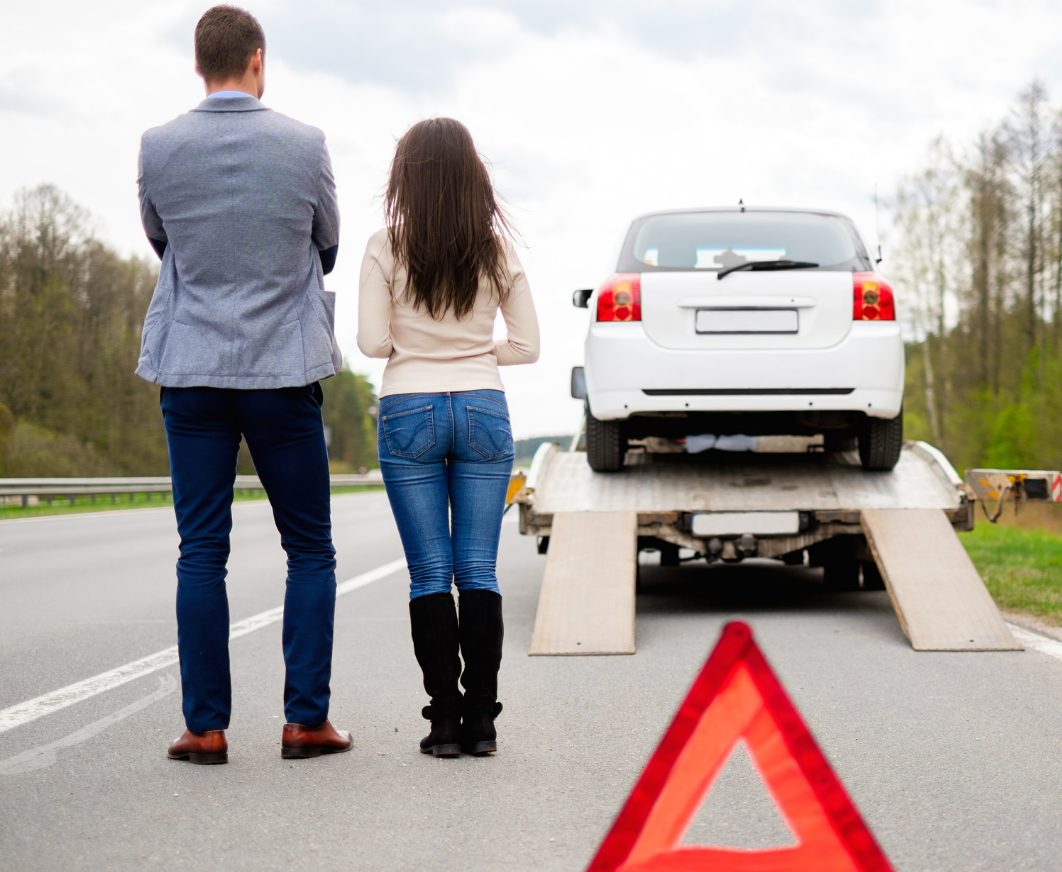
If your car needs to be towed from the scene, know that you generally have the right to choose the destination once the immediate safety need is handled - a police-directed scene tow may limit your say in the very first move, but you can redirect from there. Get an itemized invoice from whoever tows you, and photograph the vehicle again once it’s loaded.
Filing a Claim, Step by Step
Once you’re safely away from the scene, the claim itself follows a fairly consistent sequence across insurers and provinces.
1. Notify your insurer promptly. Most policies require notice within a defined window - commonly phrased as within 7 days, or simply “promptly” - as a condition of coverage. Don’t wait to see how you feel about it; call the same day if you can. Have your policy number, the accident’s date/time/location, the other driver’s information, your photos, and a brief factual account ready.
2. Get your claim number. Your insurer opens a file and assigns a number. Use it in every subsequent conversation about this accident - it’s what ties your calls, emails, and paperwork together as the file moves between people.
3. Work with your adjuster. An adjuster is assigned to assess the damage, help sort out fault (in coordination with your province’s fault determination rules), and manage the claim to resolution. They may ask for a written or recorded statement, more photos, or a vehicle inspection. Stick to facts, and keep a simple log of who you spoke to and when.
4. Choose your repair shop. In most provinces, you’re not obligated to use whichever shop your insurer suggests first - you can choose your own. Insurers often maintain a network of preferred shops that can streamline the process, sometimes with perks like a repair warranty, but “preferred” doesn’t mean “mandatory.” Confirm your specific options with your adjuster.
5. Ask about rental coverage. If your car is undriveable, ask whether your policy includes rental coverage during repairs. It’s frequently a separate optional endorsement rather than something automatic, so find out early rather than assuming it’s included.
6. Keep every towing and storage receipt. These typically fold into the same claim as your repair costs - more on this below.
7. Follow through to resolution. Repairs get completed and inspected, or your vehicle is declared a total loss and valued. Either way, the claim closes once you and the insurer agree the file is settled.
How Fault Is Determined
Fault and police charges are two separate systems that people frequently conflate. A police officer might issue a charge (or not) based on traffic law, while your insurer determines fault for insurance purposes using your province’s own fault determination rules - a process that runs independently of, and sometimes reaches a different practical outcome than, whatever happened with police at the scene.
In Ontario, for example, insurers apply a regulated Fault Determination Rules chart that assigns fault percentages based on how the collision occurred - specific scenarios (rear-ending, lane changes, left turns, and so on) map to standard fault splits. Other provinces use their own comparable frameworks, whether that’s a similar chart, an adjuster’s independent investigation, or in public-insurer provinces, the Crown corporation’s own internal process. Partial fault is common - you don’t need to be entirely at fault or entirely not at fault; many claims settle at a split, such as a percentage of responsibility assigned to each driver, which then affects premium impact and, in some provinces, deductible amounts.
If you disagree with a fault determination, you can generally ask your insurer to explain the specific rule or evidence they applied, request a review, and escalate through your insurer’s internal dispute process if you’re still not satisfied (see the dispute process section below). For a deeper look specifically at how fault gets assigned, see how fault is determined after a car accident in Canada.
DCPD: Direct Compensation Property Damage
DCPD is one of the more useful things to understand before you need it, because it changes who you call. In provinces where DCPD applies - including Ontario, Alberta since 2022, and several Atlantic provinces - if you’re not at fault (or only partly at fault) for a collision involving another Canadian-insured driver, you deal directly with your own insurer for your vehicle damage rather than pursuing the other driver’s insurance company. Your insurer pays your claim and then settles up with the other driver’s insurer behind the scenes. The practical benefit is simplicity: one phone number, one adjuster, one process, even in an accident that wasn’t your fault.
Not every province works this way - full public-insurer provinces like BC, Saskatchewan, and Manitoba, and hybrid Quebec, have their own structures for handling vehicle damage claims. Ontario drivers should also know that since January 1, 2024, it’s been possible to opt out of DCPD coverage. Opting out means you’d have no coverage for your own vehicle in a not-at-fault crash under that mechanism - this is a meaningful reduction in protection, and it’s worth treating as a decision to make carefully with your broker or insurer rather than by default. For the full picture, see what is DCPD? Direct Compensation Property Damage explained.
Accident Benefits: Coverage for Injuries
Separate from vehicle damage, every province has some form of accident benefits - coverage for injuries that applies regardless of who was at fault. The exact structure and name vary: Ontario calls its framework the Statutory Accident Benefits Schedule (SABS), and other provinces have their own equivalents, whether delivered through private insurers or, in public/hybrid provinces, through the Crown insurer or SAAQ. These benefits can include things like medical and rehabilitation costs, income replacement, and attendant care, though specific limits and eligibility depend entirely on your province and policy.
Because injury claims involve real money, real timelines, and rules that vary meaningfully by province, this is an area where getting professional advice - from your insurer, a licensed broker, or in more serious cases a lawyer - is worth the time rather than trying to piece it together yourself. See accident benefits in Canada: what you can claim for injuries for more detail, and treat it as a starting point for that conversation, not a substitute for it.
Towing and Storage in a Claim
If your vehicle needs a tow because of the collision itself, that’s generally treated as part of your claim, covered under your collision or DCPD coverage rather than billed separately as a standalone roadside expense. In practice, an accident can generate more than one towing event - a scene tow, possible storage while the claim gets sorted, and a second tow to a repair shop once your adjuster clears the vehicle to move. Each of these is typically billed separately, so keep every invoice.
A few habits protect you here: get an itemized invoice for every tow (hook-up, distance, any winching, and storage rate per day, broken out separately), keep every receipt under your claim number, and ask your adjuster early whether the second tow (to the shop) needs pre-approval or can be arranged and reimbursed after the fact. If your vehicle sits in a storage yard, ask about the per-day rate immediately - these fees vary by province and yard and accrue daily, so a slow-moving claim can turn into a surprisingly large storage bill. For the full breakdown of how towing costs move through a claim, see who pays for towing after an accident, does insurance cover towing in Canada, and how to file a car insurance claim.
Repairs and Total Loss
Most accident claims end in repair: your insurer and adjuster agree on a repair estimate, work is completed at your chosen shop (or a preferred-network shop, if you go that route), and the vehicle is inspected before the claim closes.
Sometimes, though, repair costs exceed what the vehicle is worth, and the insurer declares it a total loss - a “write-off.” In that case, the insurer pays you the vehicle’s Actual Cash Value (ACV): what it was worth in the market immediately before the crash, not what it would cost to replace it with something new or equivalent. ACV is a negotiable number in practice - you can push back on a low valuation by bringing comparable listings for similar-condition, similar-mileage vehicles in your area, and insurers generally will consider well-documented comparables. Depending on the outcome, you may also have the option to buy back the salvage vehicle from the insurer, though that’s a general option to ask about rather than something available in every case. For a full walkthrough of this process, see your car is a write-off: how insurers value it.
What Happens to Your Premium
A claim’s effect on your premium depends heavily on fault and on your specific policy. As a general pattern: at-fault claims typically raise your premium at renewal, unless you have accident forgiveness (a feature some policies include, either built in or as an optional add-on, that protects your rate after a first at-fault claim). Not-at-fault claims generally shouldn’t raise your premium - but “generally” is doing real work in that sentence, and it’s still worth shopping around at renewal to confirm your existing insurer is treating you the way you’d expect. Rules and specific rate impacts vary by insurer and province, so this is squarely a “call and ask, and compare renewal quotes” situation rather than one with a single universal answer. See will your insurance go up after an accident for a closer look, and if you’re weighing whether a small claim is even worth filing, should you file a claim or pay out of pocket walks through that decision.
Disputing a Claim Decision
If you disagree with how your insurer handled fault, a repair estimate, an ACV valuation, or a benefits decision, there’s a structured path to push back rather than just accepting the first answer:
- Start with your insurer’s internal ombudsperson or complaints process. Every insurer has an internal escalation path for disputes - ask specifically for it, since it’s often a different (and more senior) channel than your regular adjuster.
- Escalate to the General Insurance OmbudService (GIO) if you’re dealing with a private insurer and the internal process doesn’t resolve things. GIO provides independent review of unresolved complaints against member insurers.
- Contact your provincial insurance regulator for conduct issues - situations where you believe the insurer failed to follow proper process, not just a disagreement over a valuation.
- Check your policy for an appraisal clause. Many policies include a formal appraisal process as a way to resolve valuation disputes (like a contested ACV) between you and the insurer without going to court - worth asking your insurer or broker whether yours has one and how it works.
Public-insurer provinces (ICBC, SGI, MPI) and Quebec’s SAAQ have their own internal review and appeal mechanisms rather than routing through GIO, since GIO is specific to private insurers - check your Crown corporation’s own dispute process if that’s who you’re dealing with. For the full walkthrough, see how to dispute an insurance settlement in Canada.
Common Mistakes That Slow Down a Claim
A few patterns show up again and again in claims that drag on longer than they should:
- Waiting too long to report. Even a few days’ delay can complicate a claim that would otherwise have been straightforward, since many policies treat prompt notice as a condition of coverage.
- Giving a recorded statement before you’ve gathered your thoughts. You’re entitled to be factual and take a moment to get your account straight - there’s no requirement to speculate about fault or fill silence with guesses.
- Assuming a suggested repair shop is mandatory. It’s usually a recommendation, not an order. Ask directly if you’re not sure.
- Losing track of receipts. Towing, storage, rental cars, out-of-pocket expenses related to the accident - a scattered paper trail is the single most common reason a reimbursement takes longer than it should.
- Not asking who’s paying for what, up front. Whether it’s a tow, a rental, or a medical expense, asking your adjuster “is this covered, and how do I get reimbursed” before you pay is almost always faster than sorting it out afterward.
- Assuming your experience in one province applies to another. Fault rules, DCPD availability, accident benefits, and dispute processes all vary provincially - what worked for a friend or a past policy in a different province may not apply to you now.
A Documentation Checklist Worth Keeping
Keep a single folder - physical or digital - under your claim number, and drop everything related to the accident into it as it arrives:
| Document | Why You’ll Want It |
|---|---|
| Scene photos | Supports fault determination and repair estimates |
| Other driver’s information | Needed for DCPD and any cross-insurer coordination |
| Witness contact information | May be needed if fault is disputed |
| Claim number and adjuster contact | The thread that ties every conversation together |
| Tow and storage invoices (itemized) | Reimbursement and proof of what you were actually charged |
| Repair estimate(s) | Comparison point if you question a valuation |
| Comparable-vehicle listings (if totaled) | Your evidence for negotiating Actual Cash Value |
| Correspondence with your insurer | Useful if you need to escalate a dispute later |
None of this needs to be elaborate. A dated folder with everything in it, added to as the claim moves along, is what turns a stressful few weeks into a manageable paperwork exercise - and it’s exactly what you’ll be glad to have if any part of the claim ends up disputed.
Related Reading
This guide is the starting point - each topic below goes deeper on one piece of the claims process:
- How fault is determined after a car accident in Canada
- What is DCPD? Direct Compensation Property Damage explained
- Will your insurance go up after an accident?
- Should you file a claim or pay out of pocket?
- Your car is a write-off: how insurers value it
- Accident benefits in Canada: what you can claim for injuries
- Public vs private auto insurance: ICBC, SGI, MPI & SAAQ
- Hit and run in Canada: how to claim with no one to blame
- How to dispute an insurance settlement in Canada
- Who pays for towing after an accident
- How to file a car insurance claim after an accident
- Does insurance cover towing in Canada?
If you’re at the scene right now and need a tow, find a tow truck near you or check the towing cost calculator for a rough estimate. For collision-specific towing, see accident recovery or flatbed towing if your vehicle needs to go on a deck rather than be wheel-lifted.
FAQ
What’s the very first thing I should do after an accident, insurance-wise? Make sure everyone is safe and call 911 if needed, then document the scene thoroughly before anything moves. Notify your insurer as soon as reasonably possible after that - most policies require prompt notice as a condition of coverage.
Does every province handle claims the same way? No. Full public-insurer provinces (BC, Saskatchewan, Manitoba) route claims through a single Crown corporation, Quebec splits injury and vehicle-damage claims between SAAQ and private insurers, and the rest of Canada uses a private, competitive market where DCPD typically applies. Confirm your own provincial system rather than assuming.
Is towing after an accident automatically covered? Generally yes, as part of your collision or DCPD coverage, but keep every itemized invoice and confirm with your adjuster whether any step (like a second tow to the shop) needs pre-approval.
What if my insurer and I disagree on what my totaled car is worth? You can negotiate Actual Cash Value using comparable-vehicle listings, and if that doesn’t resolve it, escalate through your insurer’s internal process, then GIO (for private insurers) or your provincial regulator, and check your policy for an appraisal clause.
Will my premium go up if I wasn’t at fault? It generally shouldn’t, but this varies by insurer and by the fault percentage assigned in DCPD provinces. Ask your insurer directly how your specific policy treats not-at-fault claims, and compare renewal quotes to be sure.
This guide reflects general Canadian claims practice and is not a substitute for your actual policy wording. Provincial rules, insurer practices, and individual policy terms vary - always confirm specifics with your own insurer or broker before making a decision based on anything here.