
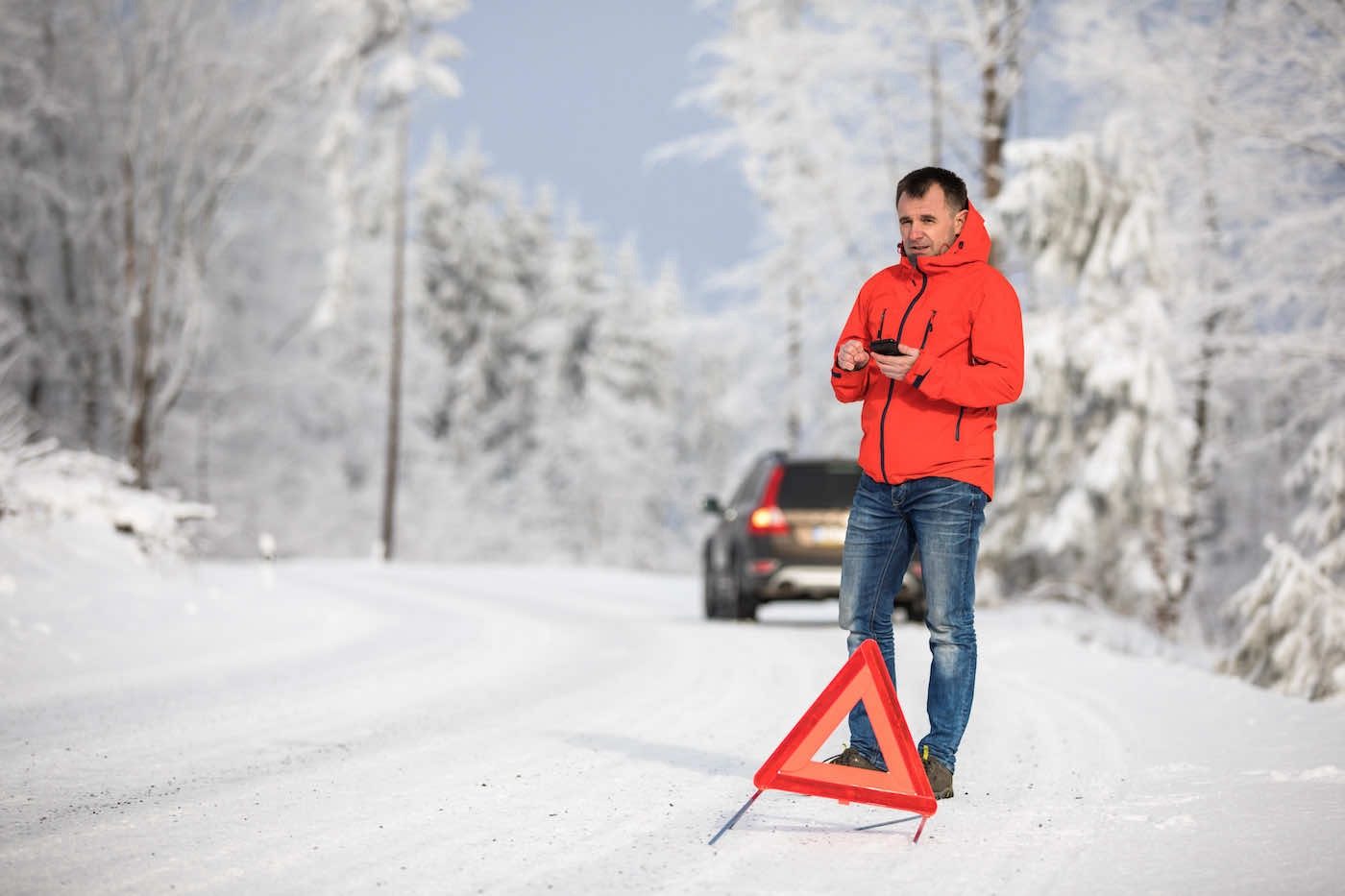
You’ve made the call. The dispatcher gave you an ETA - twenty minutes, maybe forty-five if it’s a busy night - and now there’s nothing to do but wait. That gap between calling and the truck actually arriving is where a lot of avoidable injuries happen, not during the breakdown itself. Here’s how to spend it safely, wherever you happen to be stuck.
The First Two Minutes After You Call
Before you settle in to wait, confirm three things with the dispatcher: an estimated arrival time, whether they have your exact location (cross streets, kilometre marker, or a dropped pin), and a callback number in case anything changes. Then check your own setup - hazards on, wheels straight, parking brake set. If you have reflective triangles or flares and can place them without stepping into a live lane, do it now while there’s still light or before the wait gets long. After that, your main job is simply staying visible and staying out of the way.
Waiting at Night
Darkness changes everything about a roadside wait. Your hazards are doing most of the work of keeping you visible, so leave them running the entire time, even if it drains the battery somewhat - a dead battery is a much smaller problem than an approaching driver who doesn’t see your car until the last second. A few night-specific habits matter:
- Turn on your interior dome light if you’re staying inside the vehicle. It makes the car easier to spot from a distance and helps an approaching tow operator identify the right vehicle among several.
- Wear or carry something reflective if you have it - even a phone flashlight held out the window helps a driver clock your position sooner.
- Don’t use your phone screen as your only light source while standing outside. It’s dim and it narrows your night vision, making it harder to judge how close traffic actually is.
- Confirm the operator’s identity before approaching the truck. At night it’s harder to tell a legitimate tow operator from someone who simply pulled up - ask who they’re with and check that it matches who you called.
If you’re waiting somewhere unlit and the shoulder is narrow, it’s often safer to stay buckled inside the car with hazards on than to stand outside in the dark near live traffic. Use your judgment based on what you can actually see of the road around you.
Waiting on a Highway Shoulder
A highway shoulder is the highest-risk place to wait, full stop. Traffic is moving at 100 km/h or more just a few metres away, and drivers have less time to react to anything unexpected. If there’s a guardrail, get behind it and stay there - don’t lean on the car, sit on the trunk, or stand beside the vehicle to watch for the tow truck. A shocking number of roadside injuries happen to people standing next to their own disabled car, not inside it.
If there’s no barrier and no real distance to retreat to, staying seated in the car with your seatbelt on can be the safer option than standing on a narrow shoulder. Keep your eyes on your mirrors periodically so you’re aware if a vehicle drifts toward the shoulder - you want warning, not surprise. Once the tow truck arrives and sets up, let the operator direct where you stand; they’ll usually want you further back than you’d expect, especially while they’re hooking up the vehicle. See our guide on what to do when your car breaks down on the highway for the full sequence from the moment trouble starts.
Urban vs Rural Waits
The waiting experience differs a lot depending on where you break down, and each setting has its own risk profile.
| Setting | Main Risk | What Helps |
|---|---|---|
| Urban street/parking lot | Distracted drivers, tight spaces, pedestrians | Move to a nearby lot or side street if you can do it safely; you’re rarely truly stuck |
| Urban highway/expressway | High-speed traffic, limited shoulder width | Get behind a barrier immediately; expect a shorter wait due to nearby dispatch density |
| Rural two-lane highway | Low visibility of your vehicle, longer waits | Reflective triangles matter more here; confirm cell signal before the operator loses touch with you |
| Rural gravel/backroad | Very long waits, little passing traffic, exposure to weather | Stay with the vehicle, conserve phone battery, dress for the wait, not just the drive |
In cities, waits tend to be shorter because more trucks are on the road, but the traffic density and driver distraction are higher right where you’re standing. In rural areas, the physical danger from traffic is often lower, but the wait itself becomes the bigger issue - you might be exposed to weather for an hour or more with nobody else passing by. Dress and plan for the wait you’re actually likely to have, not the one you hope for.
What Tow Operators Wish You Knew
Ask any experienced operator and you’ll hear a few consistent frustrations - and each one is an easy fix on your end:
- Stay where you said you’d be. If you wander to a nearby gas station or move the car without telling dispatch, the operator can burn ten or fifteen minutes just relocating you.
- Keep your phone charged and answered. Operators often call en route to confirm details or get a clearer pin; a call that goes to voicemail slows everything down.
- Don’t try to “help” by pushing the car yourself or attempting a DIY fix roadside on a live shoulder. It’s rarely faster and it puts you in the highest-risk position of the whole wait.
- Have your keys and ID ready when the truck arrives - fumbling in the dark or cold adds unnecessary time standing near the vehicle.
- If it’s an accident tow, know you get to choose the destination. Operators expect this question and can tell you what’s realistic; you’re not obligated to accept the first suggestion. Consent and disclosure rules exist across the country in various forms - in Ontario, TSSEA has required rate disclosure and consent since January 1, 2024.
FAQ
Should I stay inside my car or get out while waiting? It depends on the location. On a highway shoulder with a barrier, get out and go behind it. Without a barrier or safe distance, staying seated with your belt on is often the safer choice. Read the specific shoulder and traffic speed before deciding.
Is it safe to run the engine while I wait? Generally yes for warmth or air conditioning, as long as you’re parked safely and the exhaust isn’t blocked. If you’re stopped in snow, check the tailpipe periodically to avoid carbon monoxide buildup.
How do I know the tow truck that arrives is actually mine? Confirm the company name and driver name match what dispatch told you, especially at night or after an accident where unsolicited operators sometimes show up uninvited. You’re never obligated to go with a truck you didn’t call.
What if my wait is taking much longer than the estimate? Call back and ask for an update rather than assuming - traffic, weather, and a busy dispatch night can all push timelines. If you’re in a dangerous spot and the wait is getting long, consider whether a safer waiting location nearby (a lane over, or a lot ahead) makes sense.
What does a typical wait and tow actually cost? A local tow commonly runs $100–$250 total, with $75–$150 for the hook-up plus $3–$5/km, and after-hours or storm waits often carry a premium. Try the towing cost calculator for a realistic estimate, or find a tow truck near you if you haven’t called yet. If your issue turns out to be something simpler, a battery boost or roadside assistance call is usually faster and cheaper than a full tow.