
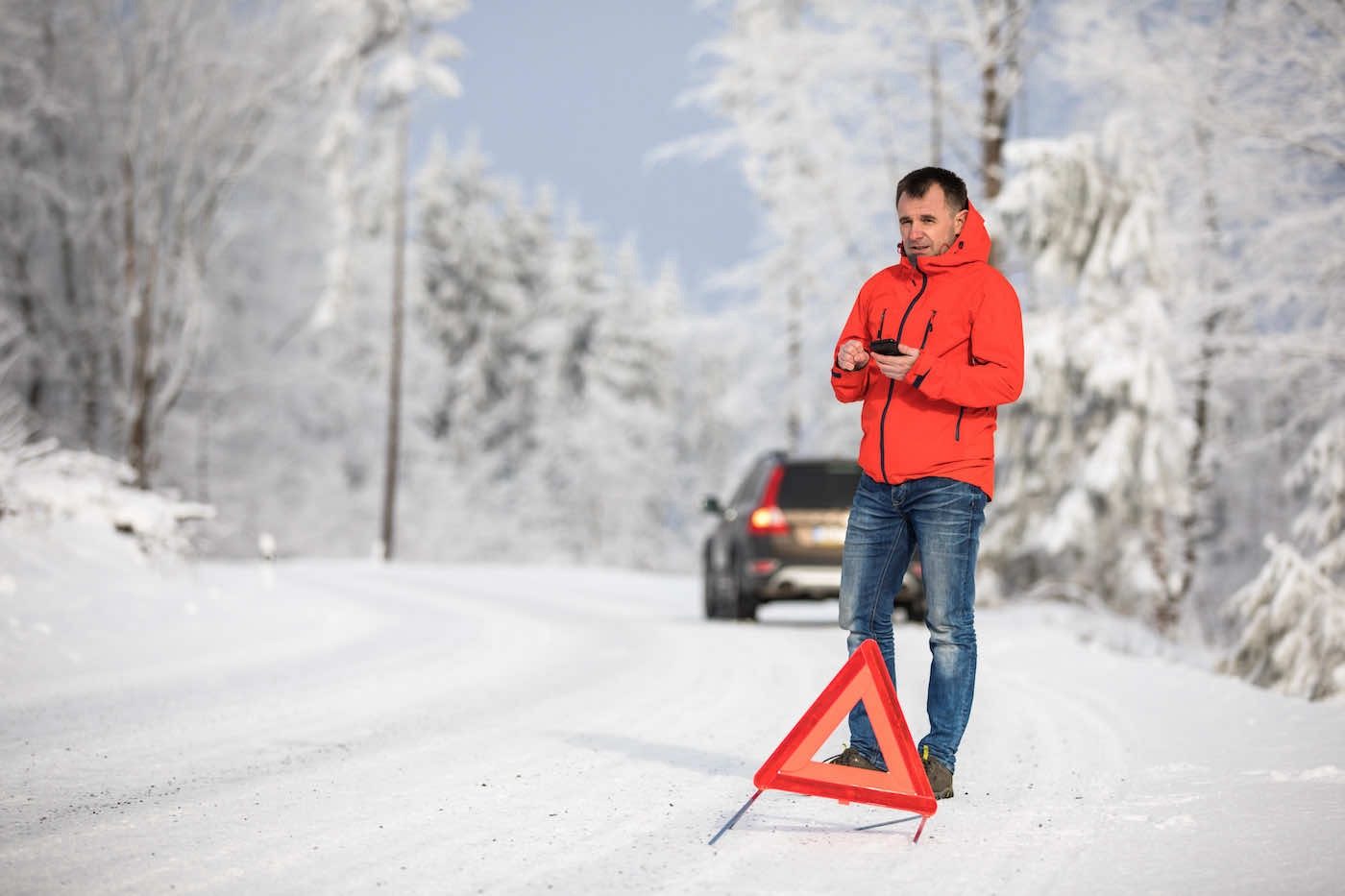
You turn the key and get a slow, sluggish groan instead of a start - or nothing at all. If it’s -20°C outside, your battery didn’t die of old age this morning, the cold just exposed weakness that was already there. Here’s why winter is so hard on batteries, roughly how much power you lose, and what actually prevents the 6 a.m. dead-battery call.
Why Cold Is So Hard on Batteries
A car battery makes power through a chemical reaction, and that reaction slows down as temperatures drop. A battery that starts your engine without hesitation in September can struggle to do the same job in January - not because anything broke overnight, but because cold literally reduces how much current the battery can deliver in a short burst.
As a fair rule-of-thumb range: batteries lose roughly a third of their cranking power at around -18°C, and roughly half by around -30°C. At the same time, cold makes engine oil thicker, so the engine itself is harder to turn over - meaning the battery has to work harder right when it has the least power to give. That combination is exactly why dead batteries cluster on the coldest mornings of the year.
Signs Your Battery Is Already Weak
A battery on its way out often gives warning signs before it fully dies:
- Slow cranking - the engine turns over noticeably slower than usual before it catches.
- Dashboard lights dim or flicker when you start the car, especially with accessories (heated seats, headlights, defrost) running.
- Clicking sound instead of a start - often a battery too weak to engage the starter.
- The battery is 3+ years old and has never been tested. Most batteries last roughly 3–5 years in Canadian conditions, sometimes less with a lot of short trips that don’t fully recharge it.
- It struggled last winter too. A battery that barely made it through one cold season rarely improves on its own.
If you notice any of these before a cold snap hits, that’s the week to deal with it - not the morning after it leaves you stranded.
What Actually Prevents a Dead Battery
- Get it tested before winter, not after it fails. Many shops and parts stores test batteries for free and can tell you if it’s marginal before the cold makes the decision for you.
- Limit short trips in extreme cold, or at least combine them. Repeated short starts without a longer drive to recharge don’t give the alternator time to fully replenish what the cold start used.
- Use a block heater if your vehicle has one, or have one installed - plugging it in a few hours before you plan to start the car warms the engine block, which reduces the strain on both the oil and the battery at start-up. This is genuinely one of the highest-value habits for deep-cold regions.
- Turn off accessories before starting. Headlights, heated seats, and blower fans all draw current the starter needs during that first crank.
- Keep terminals clean. Corrosion on battery terminals adds resistance right when you need maximum current flow - a quick visual check and a wipe-down costs nothing.
- Park indoors or wind-sheltered when you can. Wind chill affects the battery too, not just you.
What to Do If It’s Already Dead
If you turn the key and get nothing, or just a weak click, don’t keep trying - repeated attempts can further drain a weak battery and, in some cases, strain the starter. Your options:
| Option | When it makes sense |
|---|---|
| Boost from another vehicle | You have jumper cables, a willing second car, and know the correct order (see below) |
| Portable jump-starter pack | You keep one charged in the trunk - works solo, no second car needed |
| Call for a mobile boost | No cables, no second vehicle, or the battery won’t hold a charge at all |
| Tow to a shop | Battery won’t take a boost, or it’s cracked/frozen - never attempt to boost a cracked or frozen battery |
A mobile boost from a roadside operator typically runs $45–$120 flat, and it’s usually the fastest, lowest-risk option if you don’t have a second vehicle handy. For the exact steps and cable order, see our guide to how to safely boost a car battery - getting the order wrong risks a spark near battery gases, so it’s worth doing properly rather than guessing.
If the battery won’t hold a boost at all, that usually means it’s fully dead rather than just cold-weak, and the car needs a battery boost service call or a tow to a shop for a replacement.
Why “It Worked Fine Yesterday” Doesn’t Mean Much
One of the more confusing things about winter battery failure is how sudden it can feel. A battery can start the car reliably through a mild cold snap and then fail completely the next morning when the temperature drops another five or ten degrees. That’s because battery capacity declines gradually as it ages, but the effect of that decline only becomes obvious once the cold cuts deep enough into its remaining reserve to fall below what the starter needs. In other words, the battery didn’t die overnight - it was already weaker than it used to be, and a colder morning just found the threshold. This is also why a battery that struggles once in a cold snap is worth testing right away rather than assuming it was a one-off; the next cold snap is rarely far behind in a Canadian winter.
Alternator vs. Battery: Telling Them Apart
Not every no-start is actually a dead battery. A failing alternator can produce very similar symptoms - slow cranking, dimming lights, a car that won’t start - because the alternator is what recharges the battery while you drive. If a boost gets the car running but it dies again within a day or two, or the battery seems to drain even when the car sits for just a short time, that pattern points toward the alternator or a parasitic drain rather than a simple weak battery. A shop can test both quickly, and it’s worth knowing the difference before replacing a battery that wasn’t actually the problem.
A Quick Pre-Winter Battery Habit
Cold doesn’t create a bad battery - it reveals one that was already marginal. A battery in good health generally handles a Canadian winter fine; one that’s already 4+ years old or was slow to start in the fall is the one that leaves you stranded in a January cold snap. Getting it load-tested before the season turns is a five-minute stop that avoids a much worse morning later, and it pairs well with the rest of your pre-winter prep - see our 12-point winter checklist for everything else worth checking before the temperature drops.
FAQ
How much cranking power does a battery lose in the cold? As a rough rule of thumb, batteries lose roughly a third of their cranking power around -18°C and roughly half by around -30°C. Combined with thicker engine oil in the cold, that’s why dead batteries cluster on the coldest mornings.
How long do car batteries usually last in Canada? Typically around 3–5 years, though frequent short trips, extreme cold, and age all shorten that. If yours is past the 3-year mark and has never been tested, it’s worth checking before winter.
Does a block heater really help with battery issues? Yes - a block heater warms the engine, which reduces how hard the battery and starter have to work at start-up. Plugging it in a few hours before you plan to drive is one of the most effective cold-weather habits in deep-cold regions.
Can I boost a battery myself in freezing weather? Usually yes, if you have jumper cables and a donor vehicle - but never attempt to boost a battery that’s visibly cracked or appears frozen. If in doubt, call a roadside operator for a mobile boost instead.
What’s the fastest fix if my battery dies and I have no cables? Call for a mobile battery boost - most roadside operators reach you and boost on the spot for roughly $45–$120. Find a tow truck or roadside operator near you that offers battery service.