You realize it mid-pump, or worse, after you’ve already driven off - the nozzle in your hand was diesel, and your car takes gas, or the other way around. Your instinct might be to just start the car and get to a station or shop, but that instinct is exactly wrong here. Here’s what to actually do.
Step 1: Do Not Start the Engine
This is the single most important thing on this page. If you realize the mistake before starting the car - at the pump, or right after fuelling - do not turn the key. Wrong fuel sitting in the tank and lines hasn’t caused damage yet. The moment it circulates through the fuel system and into the engine, that changes.
- Gas in a diesel engine damages the fuel system’s lubrication (diesel fuel lubricates injection components that gasoline doesn’t) and can cause serious injector and pump damage once it’s run through the system.
- Diesel in a gas engine can clog fuel injectors and won’t combust properly in a gasoline engine’s ignition system, leading to poor running at best and potential damage if you keep trying to drive on it.
Either way, the fix is the same: don’t let it get further into the system than the tank.
Step 2: If You Haven’t Started the Car
- Leave the vehicle where it is if possible, or have it moved without starting the engine (in neutral, pushed, or towed) rather than driving it.
- Tell the gas station attendant immediately - many stations have dealt with this before and can help, and it’s worth knowing before you leave the lot.
- Call a tow. The car needs the tank drained by a professional before it’s started, not a quick fix you can do yourself. This is a job for a shop with the right equipment, not something to sort out at the pump.
Step 3: If You Already Started the Engine
If you didn’t realize the mistake until you were already driving:
- Pull over as soon as it’s safely possible - get off the road, hazards on.
- Shut the engine off immediately. Every additional minute of running circulates more wrong fuel through the system and increases the damage.
- Do not try to restart it “to see how it runs” or to move it further. Even a car that seems to be running okay on the wrong fuel is circulating fuel that will cause damage the longer it runs - this isn’t a wait-and-see situation.
- Call a tow. The vehicle needs to go to a shop for a professional fuel system drain and flush, not a quick top-up with the correct fuel.
Why “Just Top It Up With the Right Fuel” Doesn’t Work
A common instinct is to add the correct fuel on top, figuring it’ll dilute the wrong fuel enough to be fine. This isn’t reliable - a small amount of wrong fuel mixed in doesn’t necessarily dilute to a safe level, and you often can’t tell how much wrong fuel actually went in versus how much is already in the tank from before. The safer, and ultimately cheaper, path is a proper drain rather than gambling on dilution and hoping the engine doesn’t show symptoms until you’re already out of warranty coverage or driving distance from help.
What a Fuel Drain Actually Involves
A shop or mobile fuel service will typically:
- Drain the contaminated fuel from the tank completely.
- Flush the fuel lines to clear out any wrong fuel that’s already moved past the tank.
- Replace fuel filters, which will have absorbed some of the wrong fuel.
- In cases where the engine was run for any length of time on the wrong fuel, inspect injectors and the fuel pump for damage, since those are the components most at risk.
This is meaningfully more than pouring the tank out yourself - proper disposal of the contaminated fuel and a full line flush both matter, which is why it’s a job for a shop rather than a DIY fix.
Getting the Car There: You Need a Tow
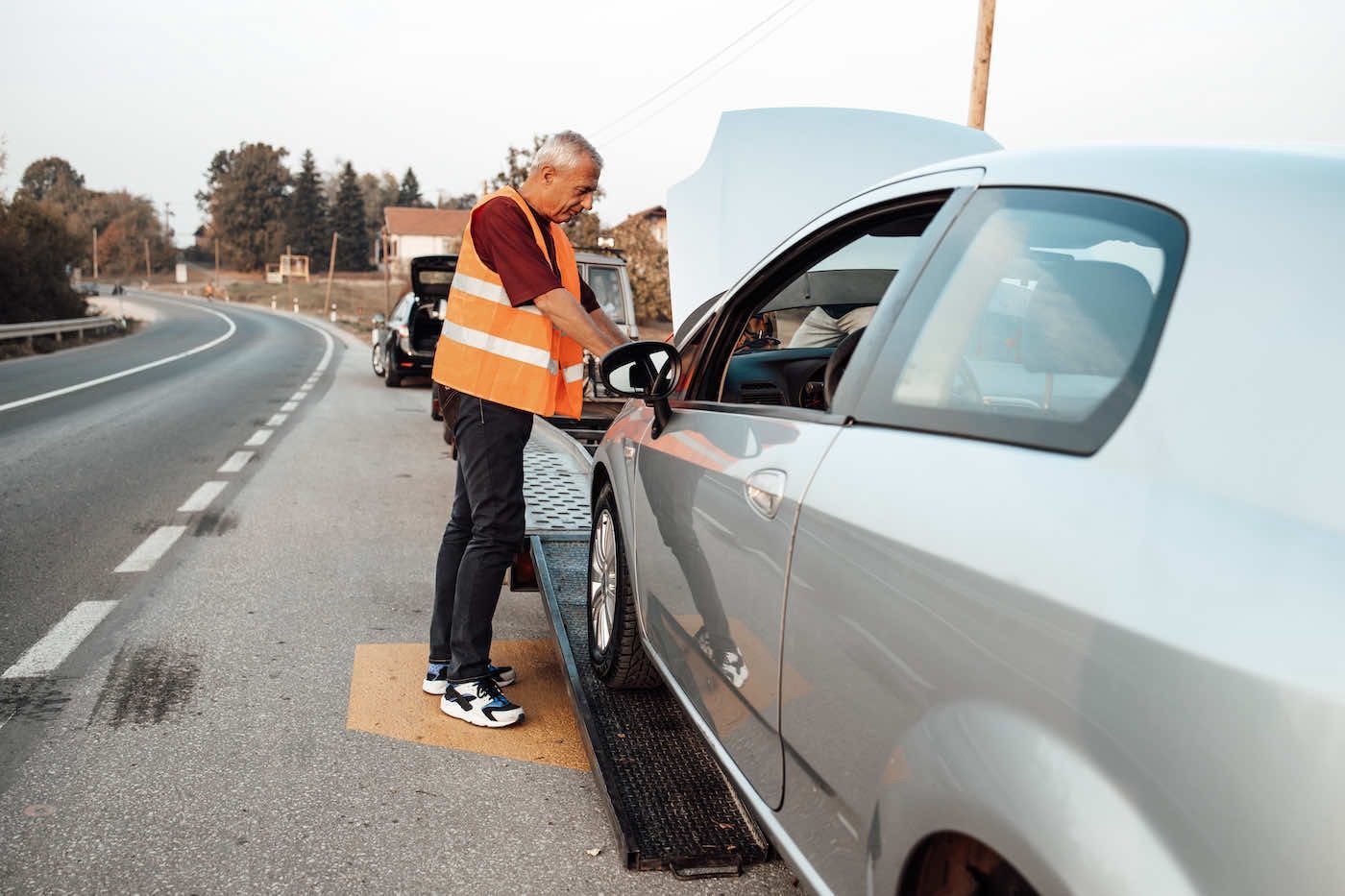
Because starting the engine is exactly what you’re trying to avoid, the car needs to go to a shop on a flatbed, not drive there under its own power even for a short distance. Fuel delivery service - the roadside call for running out of gas - doesn’t apply here; this specifically needs a flatbed tow since a wheel-lift tow still requires some driving conditions the vehicle can’t safely be in if there’s any risk of a rolling start.
| Situation | What to call |
|---|---|
| Wrong fuel, never started | Tow to a shop for a drain |
| Wrong fuel, started and driving | Pull over, shut off immediately, tow to a shop |
| Ran out of gas (correct fuel, just empty) | Fuel delivery, typically $45–$90 |
A tow for this situation is priced like a standard light-duty tow - typically $75–$150 hook-up plus $3–$5/km, commonly $100–$250 total for a local tow. It’s a frustrating extra cost on top of an already frustrating mistake, but it’s far cheaper than injector or fuel pump replacement from a wrong-fuel engine run.
Preventing It Next Time
- Fuel nozzle colours and sizes differ intentionally - diesel nozzles are often a different colour (commonly green or yellow, though not universal) and sometimes physically larger to reduce this exact mistake, but don’t rely on colour alone since it isn’t standardized everywhere.
- Read the pump label, not just the handle, especially at unfamiliar stations or with a rental or borrowed vehicle you’re not used to.
- Save a local operator’s number who offers fuel delivery alongside towing - while it won’t help with a wrong-fuel mistake, it’s the right call the next time you simply run dry.
- Double-check with a rental or work vehicle - this mistake happens disproportionately with unfamiliar cars, since muscle memory from your own vehicle doesn’t apply.
FAQ
I put the wrong fuel in but haven’t started the car - what do I do? Don’t start the engine. Have the vehicle towed to a shop for a fuel system drain rather than trying to sort it out yourself at the pump.
I already drove a short distance before realizing - how bad is it? Pull over immediately, shut the engine off, and don’t restart it. The longer the engine ran, the more likely there’s some injector or fuel pump exposure, which a shop should assess along with the drain.
Can I just add the correct fuel on top to dilute the mistake? Not reliably - you generally can’t be sure how diluted the mix actually is, and it’s not a safe substitute for a proper professional drain and flush.
Is a wrong-fuel fill-up covered by insurance? Wrong-fuel mistakes are typically a mechanical/driver-error issue rather than a collision claim, so standard auto insurance usually doesn’t apply - check with your insurer, but budget for this as an out-of-pocket repair and tow.
Does this need a flatbed tow specifically? Yes - the vehicle shouldn’t be started or driven at all, so it needs to go on a flatbed rather than a wheel-lift tow that could require the engine to run.
If you’ve put the wrong fuel in, resist the urge to just try driving to a station - find a tow truck near you that can get the car to a shop safely instead.